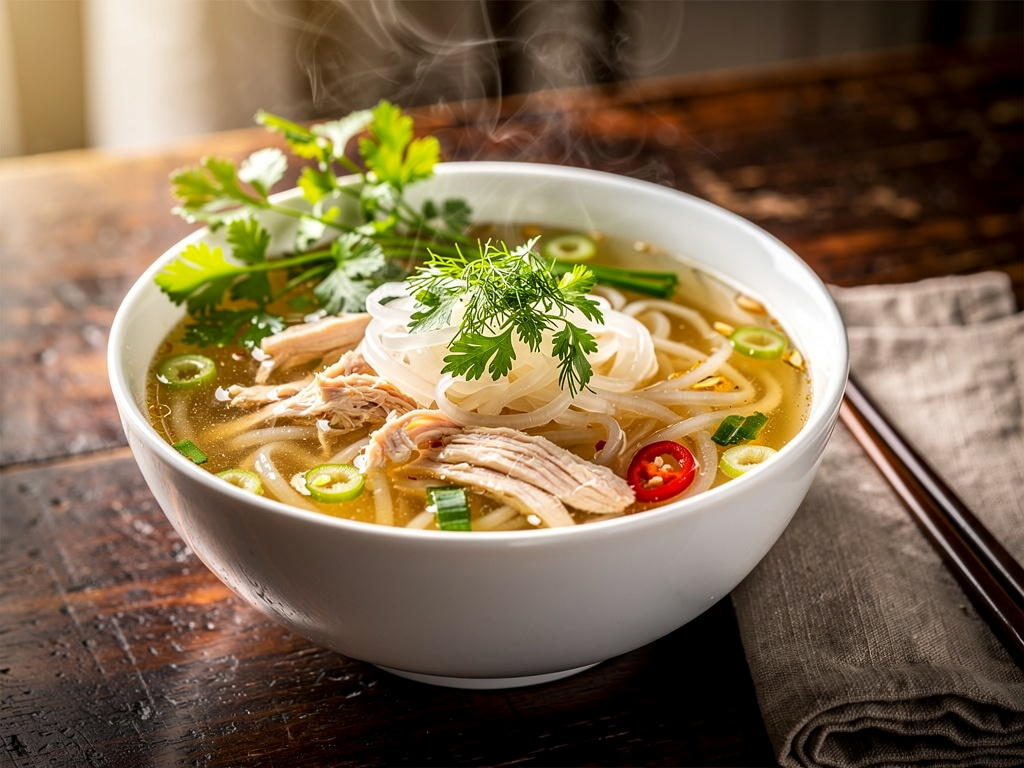
The gentle steam rising from a bowl of Vietnamese Chicken Pho carries with it the soul-warming aromas of charred ginger, toasted star anise, and rich, golden broth that has been lovingly simmered to perfection. This isn't just soup—it's a fragrant embrace that transforms your kitchen into a bustling Saigon street corner, where the art of pho-making has been perfected over generations. With tender shredded chicken nestled atop silky rice noodles and an aromatic broth that achieves restaurant-quality depth in just 40 minutes, this homemade Pho Ga proves that authentic Vietnamese comfort food is absolutely achievable in your own home.
Pho Ga holds a special place in Vietnamese cuisine as the chicken version of the beloved national dish, traditionally enjoyed as a breakfast soup but perfect any time of day. Unlike its beef counterpart Pho Bo, which requires hours of slow simmering, chicken pho offers home cooks a more accessible entry point into this culinary tradition while maintaining all the complex, layered flavors that make pho so addictive. This recipe honors the authentic techniques—from charring aromatics to carefully balancing the holy trinity of fish sauce, sugar, and salt—while streamlining the process for busy home kitchens.
The Magic of Charred Aromatics
The secret to achieving that distinctive pho flavor lies in a technique that might seem unusual to Western cooks: charring your ginger and onion directly over an open flame or under the broiler. This isn't just for show—the slight blackening creates complex, smoky notes that form the flavor foundation of your broth. When you char the 4-inch piece of ginger and halve the large onion, you're unlocking compounds that simply can't be achieved through regular cooking methods. The charred edges add a subtle bitterness that balances the sweetness from the added sugar, while the caramelized natural sugars in both aromatics deepen the overall flavor profile. Don't skip this step or try to shortcut it in a dry pan—the direct flame contact creates irreplaceable depth that distinguishes restaurant-quality pho from ordinary chicken soup.
Key Ingredients & What Makes Them Special
The star anise, cloves, and cinnamon stick in this recipe form what Vietnamese cooks call the spice trinity of pho, and toasting them whole before adding to the broth is crucial for maximum impact. Star anise, with its distinctive eight-pointed shape, provides the signature licorice-like aroma that makes pho instantly recognizable, while whole cloves add warm, numbing spiciness and cinnamon contributes sweet warmth. Toasting these spices in a dry pan for just a minute or two awakens their essential oils and prevents them from tasting flat or dusty in the finished broth.
Fish sauce serves as the umami backbone of your pho broth, providing the deep, salty complexity that makes the soup so satisfying. The three tablespoons might seem like a lot, but this ingredient is doing the heavy lifting of seasoning 10 cups of broth while adding layers of fermented richness. Choose a high-quality fish sauce—the ingredient list should contain only anchovies, salt, and water. The tablespoon of sugar isn't just for sweetness; it balances the fish sauce's intensity and helps create the characteristic sweet-savory profile that defines authentic pho.
Pro Tips for the Best Results
- Use bone-in chicken pieces: The combination of thighs and drumsticks provides both rich flavor and enough gelatin to create a silky, restaurant-style broth texture
- Skim the surface regularly: During the first 10 minutes of simmering, remove any foam or impurities that rise to the surface for a crystal-clear, clean-tasting broth
- Don't overcook the chicken: Remove the chicken as soon as it's cooked through (about 25-30 minutes) to prevent dry, stringy meat while letting the bones continue simmering
- Strain twice for clarity: First through a regular strainer, then through a fine-mesh strainer lined with cheesecloth for restaurant-quality clear broth
- Taste and adjust before serving: Pho broth should balance salty, sweet, and aromatic elements—add more fish sauce, sugar, or salt as needed
Variations & Substitutions
For those avoiding fish sauce, substitute with a combination of soy sauce and mushroom broth, though the flavor profile will be noticeably different. Vegetarians can create a plant-based version using shiitake mushrooms, vegetable broth, and doubling the aromatics and spices for intensity. If you can't find star anise, Chinese five-spice powder contains star anise and can work in a pinch—use about 1 teaspoon instead of the whole spices. For a richer broth, add chicken wings or backs along with your main chicken pieces. Those watching sodium can reduce fish sauce and compensate with extra ginger and aromatics, though traditional pho is inherently a well-seasoned dish.
Serving Suggestions
Traditional pho accompaniments include fresh herbs like cilantro, Thai basil, and mint, plus bean sprouts, lime wedges, sliced jalapeños, and hoisin sauce or sriracha on the side. Serve the hot broth over pre-soaked rice noodles (bánh phở) with the shredded chicken on top, allowing diners to customize their bowls with desired toppings. Consider offering additional fish sauce and sugar at the table, as pho preferences are highly personal. A crispy Vietnamese baguette or spring rolls make excellent side dishes, though the pho itself is substantial enough to serve as a complete meal.
Storage & Make-Ahead Tips
The beauty of this pho recipe lies in its make-ahead potential. The broth actually improves overnight as flavors meld, and can be refrigerated for up to 4 days or frozen for 3 months. Store the shredded chicken separately from the broth to prevent overcooking during reheating. Cook rice noodles fresh each time you serve, as they become mushy when stored. For meal prep, portion the broth and chicken into individual containers, then simply heat and pour over freshly prepared noodles. The broth will develop a layer of fat on top when chilled—this is normal and can be removed before reheating, though leaving some fat adds richness to the final dish.
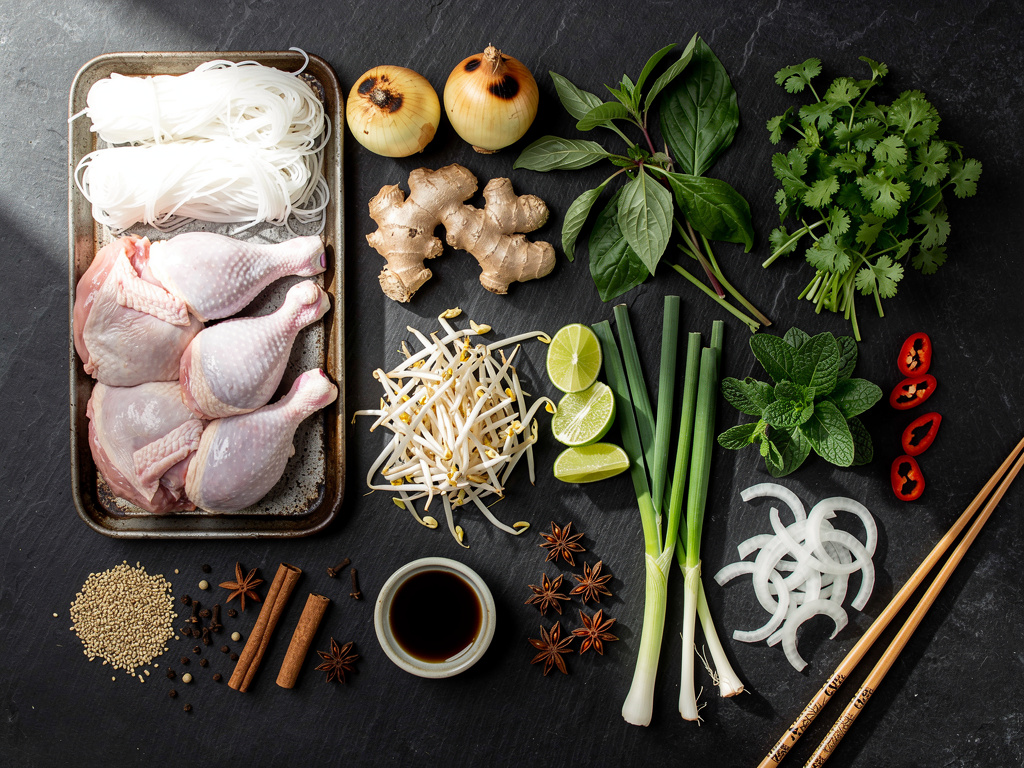
Vietnamese Chicken Pho
An aromatic Vietnamese noodle soup featuring star anise, ginger, and tender chicken over rice noodles. Authentic Pho Ga made easy at home.
Nutrition per serving
Ingredients
Instructions
- . Char ginger and onion. Toast spices.
- . Simmer chicken with aromatics 40 minutes.
- . Strain broth. Shred chicken.
- . Assemble bowls with noodles, chicken, and toppings.
Recipe Notes
- Deeper broth: Use a whole chicken and simmer 1-2 hours.
- Quick version: Use store-bought broth and add pho spice packet.
- Noodle tip: Don't overcook - they'll soften more in hot broth.
- Storage: Broth refrigerates 5 days, freezes 3 months. Store noodles separately.
More Chicken Soups Recipes
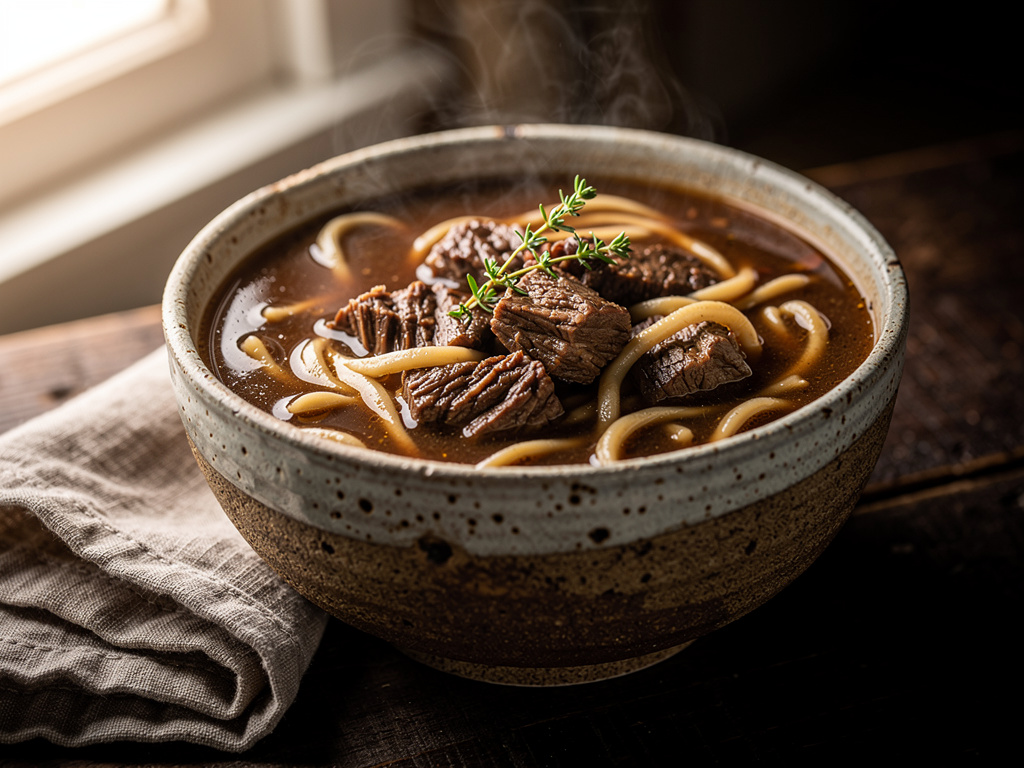
Vietnamese Beef Noodle Soup
Authentic Vietnamese-style beef noodle soup with slow-simmered bone broth, aromatic spices like star...
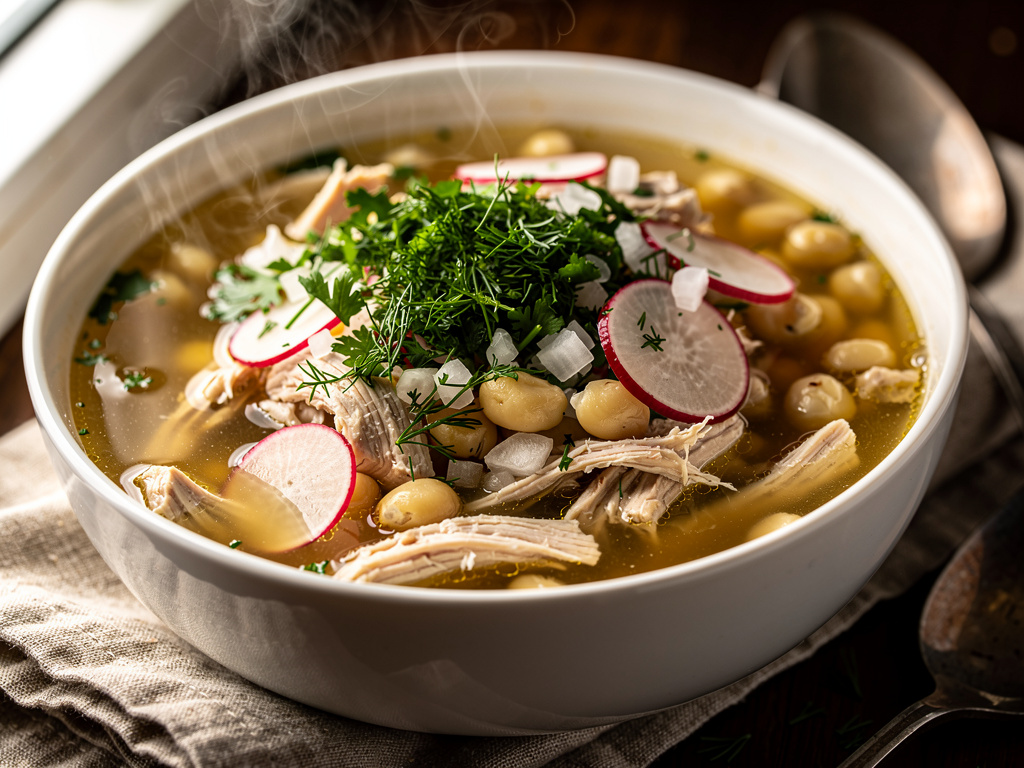
Chicken Pozole Verde
A vibrant Mexican soup featuring tender chicken, chewy hominy, and tangy tomatillo salsa. Traditiona...
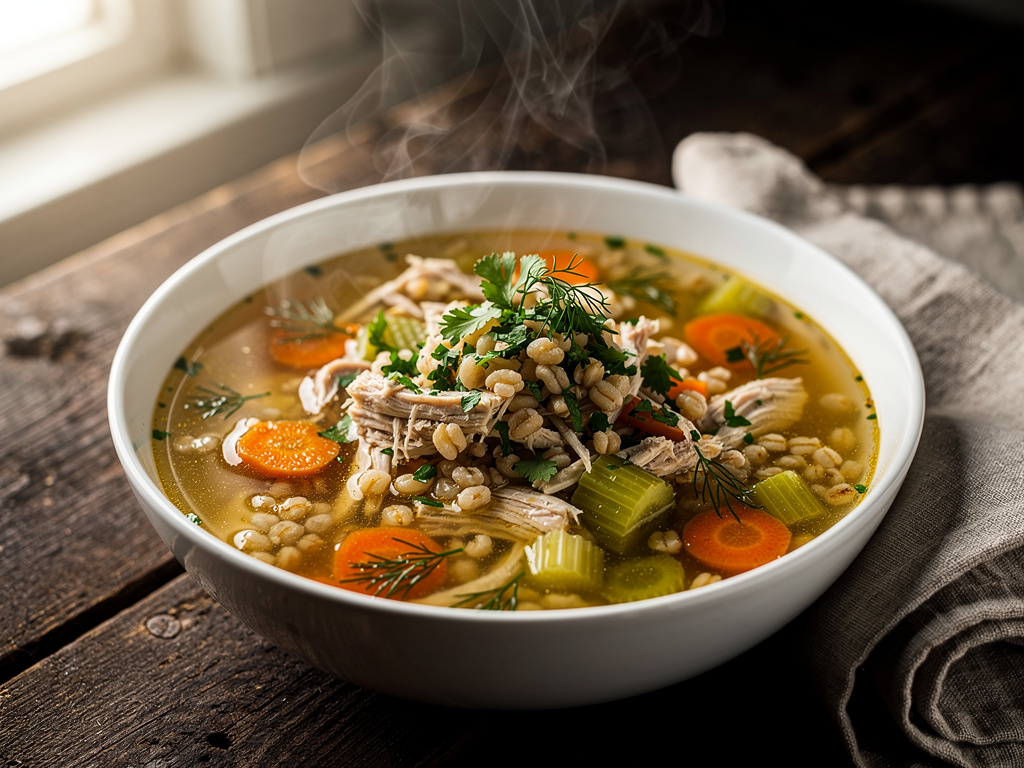
Chicken Soup with Barley
A hearty, fiber-rich soup featuring tender chicken and chewy pearl barley. Old-fashioned comfort tha...