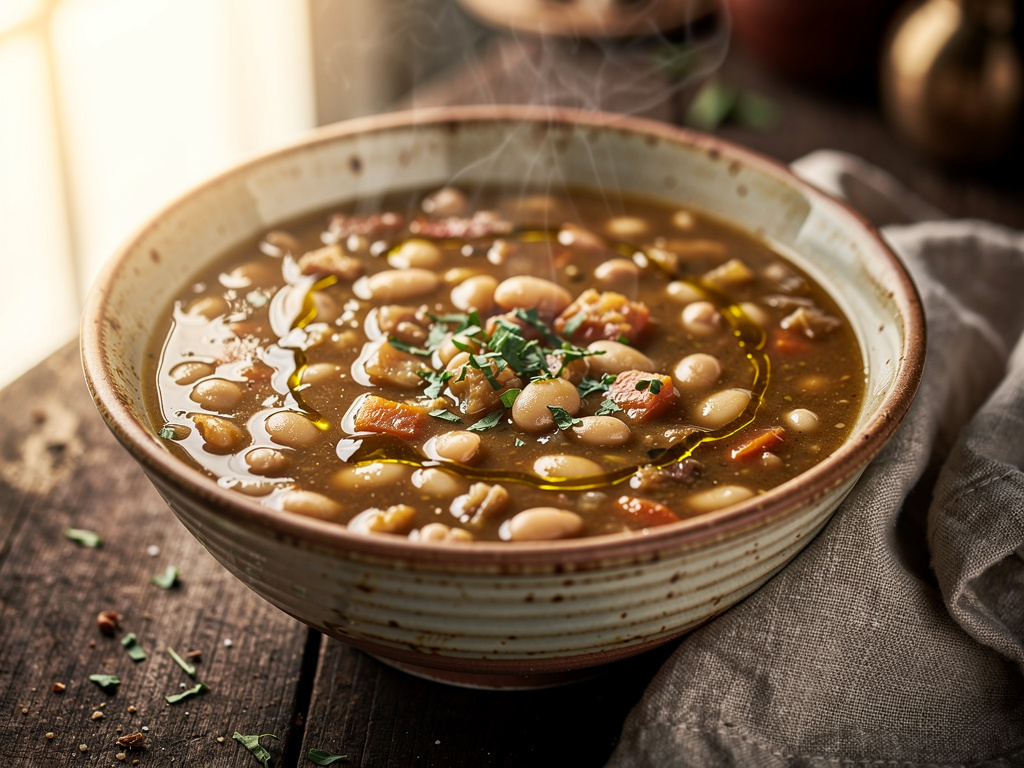
When winter winds howl through the cobblestone streets of Florence, there's nothing quite like a steaming bowl of ribollita to warm both body and soul. This isn't just any bean soup – it's a masterpiece born from the frugal genius of Tuscan grandmothers who transformed yesterday's stale bread and humble vegetables into liquid gold. The magic happens when day-old crusty bread dissolves into the broth, creating a velvety texture that's neither soup nor stew, but something wonderfully in between.
Ribollita literally means "reboiled" in Italian, a testament to its origins as a dish that improved with time and reheating. Born in medieval Tuscany, this recipe represents the pinnacle of cucina povera – peasant cooking that turns simple, affordable ingredients into extraordinary meals. Unlike many soups that rely on cream or flour for richness, ribollita achieves its luxurious mouthfeel through the slow dissolution of bread and the natural starches from cannellini beans, creating a soup so satisfying it can anchor an entire meal.
The Bread-Thickening Technique That Changes Everything
What sets authentic ribollita apart from ordinary bean soups is its revolutionary use of day-old bread as both thickener and substance. When you add those crusty bread cubes during the final 10 minutes of cooking, you're not just adding filler – you're creating the soup's signature silky, porridge-like consistency that clings to your spoon. The bread needs to be sturdy enough to hold its shape initially but porous enough to absorb the flavorful broth. Tuscan pane sciocco (saltless bread) is traditional, but any good-quality sourdough or country bread works beautifully. The key is timing: add the bread too early and it turns to mush, too late and it won't properly integrate with the other flavors.
Key Ingredients & What Makes Them Special
The lacinato kale in this recipe isn't just a trendy superfood addition – it's the authentic choice that makes all the difference. Also called dinosaur kale or cavolo nero, this dark, bumpy-leafed variety has a more complex, almost mineral flavor compared to curly kale, and it holds its texture beautifully even after extended cooking. Unlike regular kale, which can become slimy when overcooked, lacinato kale maintains a pleasant bite while absorbing the rich broth flavors. Cannellini beans are equally crucial – these creamy white Italian beans have a naturally buttery texture that becomes even more luxurious when some are lightly mashed during cooking, helping to thicken the soup naturally. Their mild flavor allows the vegetables and herbs to shine while providing substantial protein and fiber that makes this vegetarian soup incredibly satisfying.
Pro Tips for the Best Results
- Master the soffritto foundation: Take your time with the initial 8-minute sauté of onions, carrots, and celery. This holy trinity should be golden and fragrant, not browned, creating the aromatic base that carries through the entire soup.
- Partially mash the beans: Before adding to the pot, lightly crush about half the cannellini beans with a fork. This releases their natural starches and creates a creamier final texture without any dairy.
- Remove rosemary stems before serving: While the woody stems infuse wonderful flavor during cooking, fish them out before ladling – nobody wants to bite down on a tough twig.
- Let it rest and reheat: True to its name, ribollita actually tastes better the next day. The flavors meld overnight, and gentle reheating allows the bread to fully dissolve into silky richness.
- Finish with quality olive oil: That final drizzle of good Tuscan extra virgin olive oil isn't optional – it brightens all the flavors and adds a luxurious mouthfeel that ties everything together.
Variations & Substitutions
While purists might object, this ribollita recipe adapts beautifully to different dietary needs and ingredient availability. Swap the lacinato kale for regular kale, Swiss chard, or even spinach – just adjust cooking times accordingly since spinach wilts in just 2-3 minutes. For a protein boost, add leftover cooked white beans or chickpeas. Gluten-free cooks can substitute the bread with cooked rice or quinoa added in the final minutes, though you'll miss the traditional texture. Those avoiding nightshades can omit the tomatoes and add an extra cup of broth, perhaps with a splash of white wine for acidity. The vegetable base is endlessly adaptable – fennel, leeks, or parsnips can replace or supplement the classic carrot-celery-onion trio.
Serving Suggestions
Ribollita shines as a complete meal, but thoughtful accompaniments elevate the experience. Serve alongside thick slices of toasted country bread rubbed with raw garlic and drizzled with olive oil – the contrast of textures is divine. A simple arugula salad dressed with lemon and pecorino provides a peppery counterpoint to the soup's richness. For wine, choose a medium-bodied Chianti Classico or Sangiovese that echoes the soup's Tuscan origins. The earthy flavors pair beautifully with the beans and kale while standing up to the robust herbs. In true Italian fashion, finish with a small wedge of aged Parmigiano-Reggiano for guests to grate over their bowls.
Storage & Make-Ahead Tips
Ribollita is the ultimate make-ahead soup, actually improving with time as the flavors deepen and meld. Store covered in the refrigerator for up to five days, though you'll likely need to thin it with additional broth when reheating since the bread continues to absorb liquid. For meal prep, consider keeping some of the bread separate and adding fresh cubes when reheating portions – this maintains better texture control. The soup freezes well for up to three months, though the texture will be softer after thawing. When reheating, do so gently over low heat, stirring frequently and adding broth as needed. Remember, the consistency should be thick enough to eat with a fork but loose enough to slurp – adjust with warm broth until it reaches that perfect ribollita consistency that's uniquely satisfying.
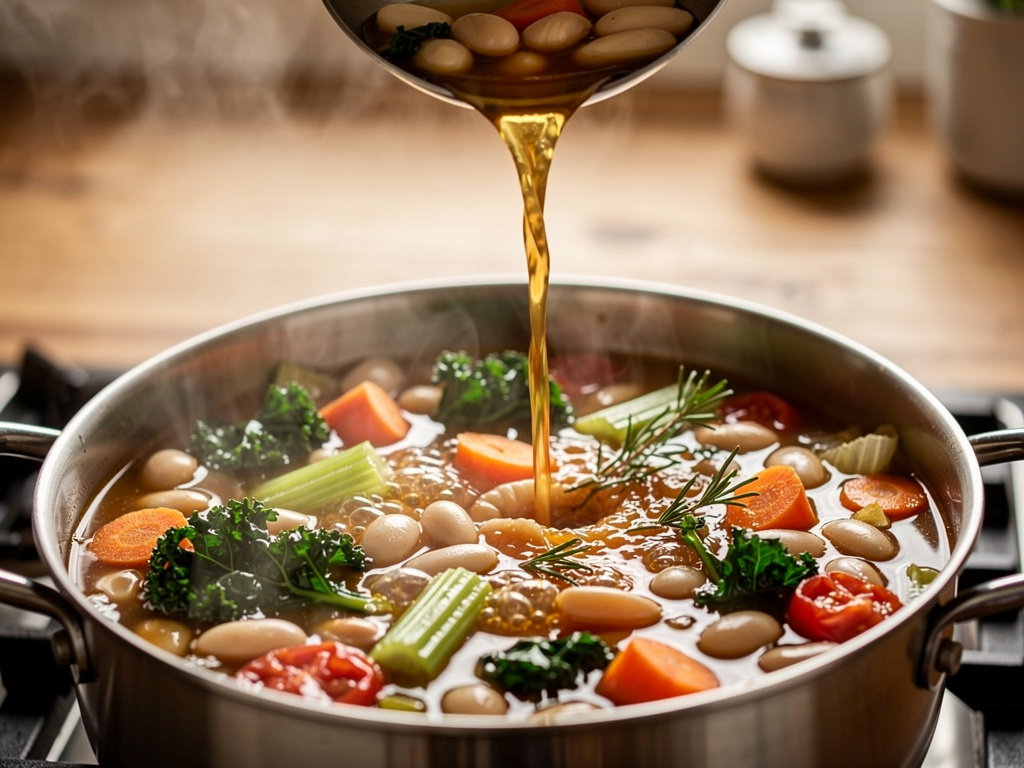
Tuscan Bean Soup
Classic Tuscan ribollita - a hearty bread soup with cannellini beans, lacinato kale, and day-old crusty bread.
Nutrition per serving
Ingredients
Instructions
- . Heat olive oil. Sauté onion, carrots, celery 8 minutes. Add garlic, cook 1 minute.
- . Add tomatoes, beans, broth, and rosemary. Simmer 15 minutes.
- . Add kale and bread cubes. Cook 10 minutes until bread softens and kale wilts.
- . Remove rosemary. Season and serve with olive oil and Parmesan.
Recipe Notes
- Make ahead: Even better the next day after flavors meld.
- Vegan: Skip the Parmesan or use nutritional yeast.
- Thicker soup: Mash some beans before adding.
- Storage: Refrigerate 5 days. Add broth when reheating.
More Bean Soups Recipes
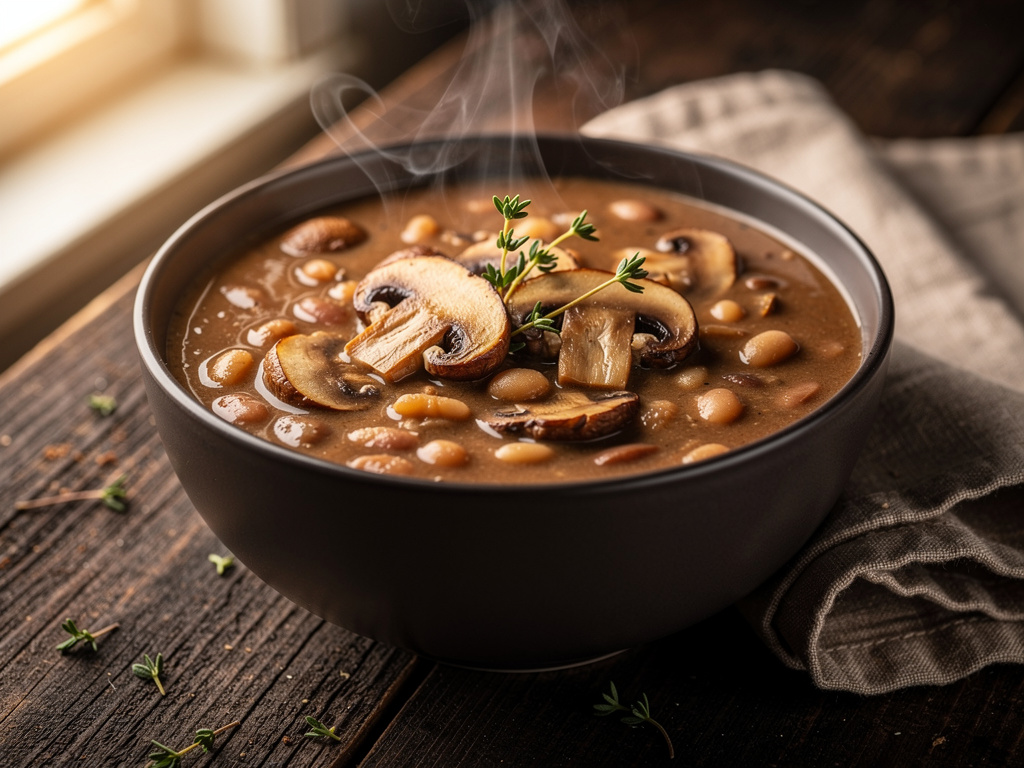
Bean Soup with Mushrooms
A rich and earthy vegetarian soup combining creamy white beans with sautéed mushrooms, fresh thyme, ...
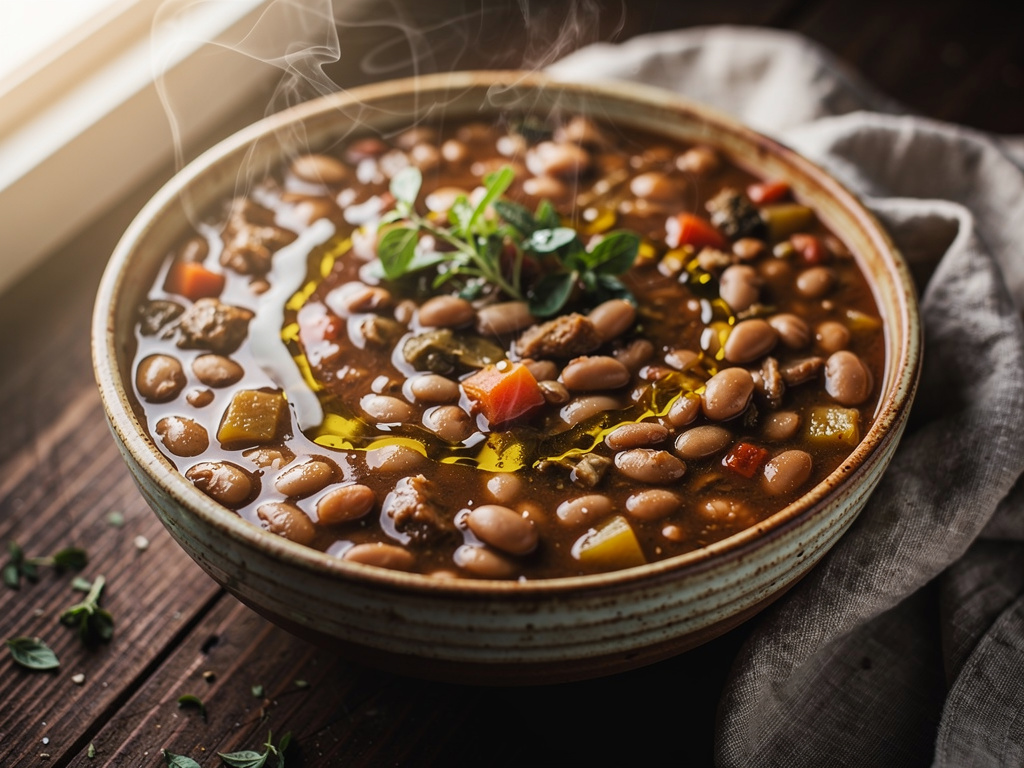
Bean Soup with Walnuts
A hearty Georgian-inspired soup featuring kidney beans enriched with a traditional walnut paste and ...
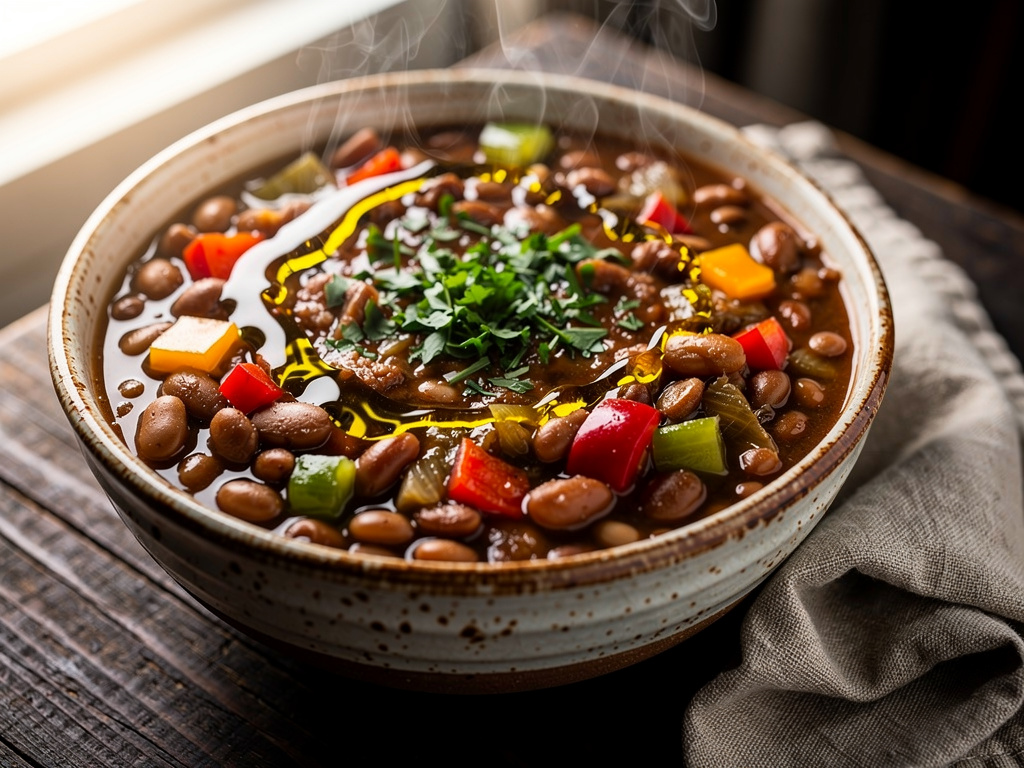
Bean Soup with Bell Pepper
A colorful and nutritious bean soup featuring tri-color bell peppers, white beans, and aromatic herb...