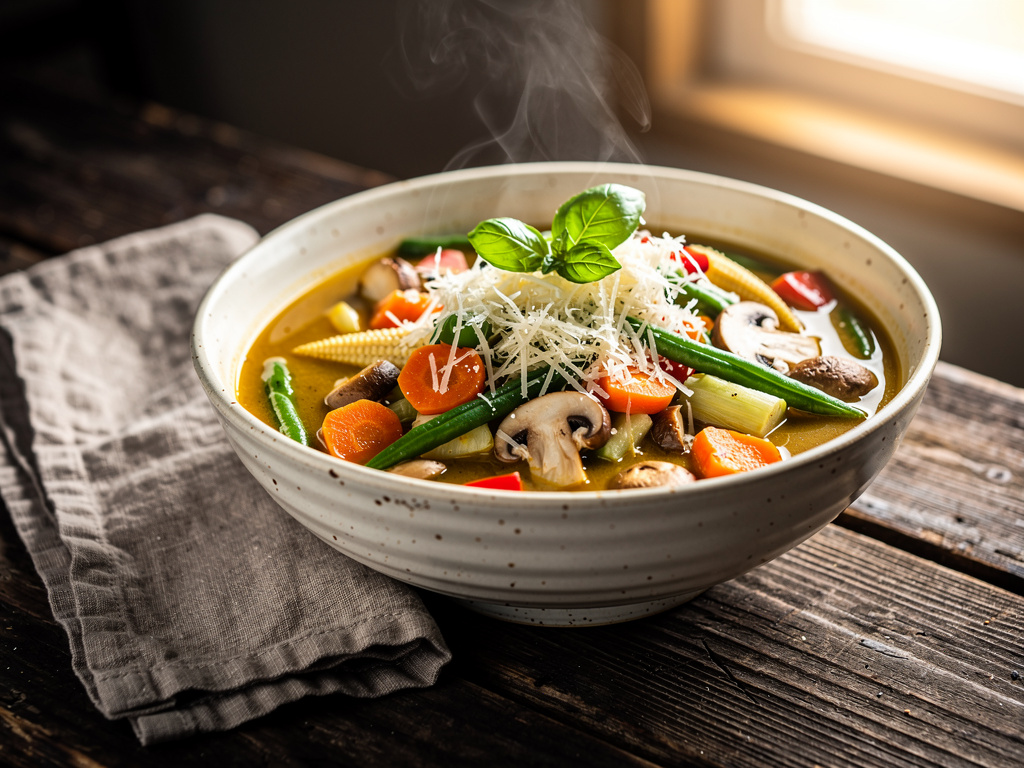
There's something magical about the moment when lemongrass meets hot coconut oil in your pot – that instant release of citrusy, floral fragrance that transforms your kitchen into a Thai street food paradise. This Thai Vegetable Soup captures that essence perfectly, delivering a bowl of comfort that's both exotic and deeply satisfying. Unlike heavy Western soups that rely on cream or flour for richness, this vibrant creation gets its luxurious texture from coconut milk while maintaining a bright, clean finish that leaves you craving more.
This soup represents the heart of Thai cooking philosophy – the perfect balance of flavors that dance on your palate. While tom kha gai (Thai coconut chicken soup) might be more familiar to Western diners, this vegetarian version celebrates the aromatic herbs and vegetables that form the foundation of Thai cuisine. The beauty lies in how each ingredient maintains its distinct character while contributing to a harmonious whole, creating a soup that's simultaneously grounding and uplifting – truly exotic comfort in a bowl.
The Aromatics That Make All the Difference
The secret to this soup's incredible depth lies in building layers of fragrance from the very first step. By gently heating the lemongrass, garlic, ginger, and Thai chili in coconut oil, you're creating what Thai cooks call a "flavor base" – essentially blooming the aromatics to release their essential oils. This technique, borrowed from traditional Thai curry-making, ensures that every spoonful carries the full impact of these powerful ingredients. The bruised lemongrass stalks act like flavor bombs, slowly releasing their lemony essence throughout the cooking process, while the fresh ginger adds warmth without overwhelming heat. This careful orchestration of aromatics is what separates authentic Thai flavors from simple coconut milk soup.
Key Ingredients & What Makes Them Special
The lemongrass in this recipe isn't just a flavoring agent – it's the soul of the soup. When you bruise the stalks (gently smashing them with the flat side of your knife), you're breaking the fibrous cell walls to release the concentrated oils trapped inside. Unlike dried lemongrass, fresh stalks continue to infuse flavor throughout cooking, creating a soup that tastes more complex the longer it sits. Look for stalks that feel heavy and have tightly packed layers – these contain the most essential oils.
The coconut milk serves a dual purpose beyond richness. Full-fat coconut milk contains natural emulsifiers that help marry the oil-soluble compounds from your aromatics with the water-based broth, creating that silky, cohesive texture that makes each spoonful satisfying. The key is using the entire can – both the thick cream that separates at the top and the thinner liquid below – for the perfect consistency.
Kaffir lime leaves deserve special mention as the ingredient that truly authenticates this soup. These glossy, figure-eight shaped leaves release a floral citrus note that's impossible to replicate with regular lime zest. They're becoming more available in Asian markets and can be frozen for months, making them a worthwhile pantry investment for any Thai cooking enthusiast.
Pro Tips for the Best Results
- Don't rush the aromatics stage – those first two minutes of gently cooking the lemongrass, garlic, and ginger are crucial for developing deep flavor. You should smell the fragrance throughout your kitchen.
- Slice mushrooms evenly – uniform pieces ensure they cook at the same rate and don't become mushy while others remain raw. About ¼-inch thickness works perfectly.
- Add coconut milk gradually – pour it slowly while stirring to prevent curdling, especially if your pot is very hot.
- Taste and adjust the balance – Thai cuisine is all about harmony between sweet (brown sugar), salty (soy sauce), sour (lime), and spicy (chili). Adjust these elements to your preference.
- Remove lemongrass before serving – while it adds incredible flavor, the woody stalks aren't pleasant to bite into accidentally.
Variations & Substitutions
For a protein boost, add cubed firm tofu during the last 5 minutes of cooking, or stir in cooked shrimp just before serving. If you can't find kaffir lime leaves, substitute with the zest of one lime added at the end. Vegetarians can use tamari instead of soy sauce for gluten-free needs, while those avoiding coconut can use cashew cream blended with vegetable broth for similar richness. Baby bok choy, snow peas, or sliced zucchini make excellent additions to the vegetable medley – just add them during the last few minutes to maintain their crisp texture.
Serving Suggestions
This soup shines as a light dinner served over jasmine rice or rice noodles, transforming it into a more substantial meal. For an authentic Thai experience, serve alongside fresh herbs like cilantro, Thai basil, and sliced chilies, allowing diners to customize their bowls. The soup also makes an elegant first course before grilled fish or chicken, as its bright flavors awaken the palate. Consider pairing with crispy spring rolls or Thai cucumber salad for textural contrast.
Storage & Make-Ahead Tips
This soup actually improves overnight as the flavors meld, making it perfect for meal prep. Store in the refrigerator for up to four days, but note that the coconut milk may separate – simply stir gently while reheating. For best results, prepare the soup base without the lime juice and fresh herbs, adding these just before serving to maintain their bright impact. The soup freezes well for up to three months, though the coconut milk texture may change slightly upon thawing. When reheating, do so gently over low heat to prevent the coconut milk from breaking.
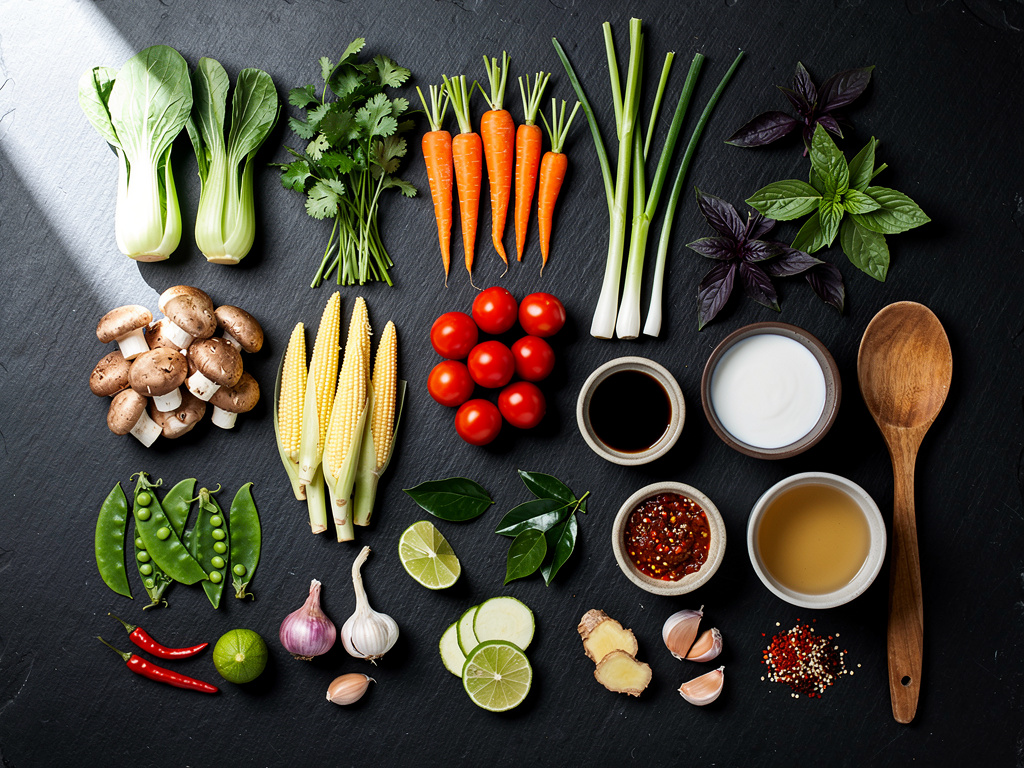
Thai Vegetable Soup
Fragrant Thai-inspired soup with coconut milk, lemongrass, mushrooms, and fresh lime. Exotic comfort.
Nutrition per serving
Ingredients
Instructions
- . Heat coconut oil in a large pot over medium heat. Add lemongrass, garlic, ginger, and Thai chili. Cook 2 minutes until fragrant.
- . Add mushrooms and bell pepper. Cook for 3 minutes until starting to soften.
- . Pour in broth, coconut milk, soy sauce, brown sugar, and lime leaves. Bring to a simmer and cook 10 minutes.
- . Add snap peas and cook 2 minutes until tender-crisp. Remove lemongrass pieces and lime leaves.
- . Stir in lime juice. Ladle into bowls and garnish with Thai basil, cilantro, and sliced chilies.
Recipe Notes
- Add lime juice off the heat to avoid bitterness
- Remove lemongrass before serving—it's not meant to be eaten
- Use full-fat coconut milk for best results
More Thai Vegetable Soup Recipes
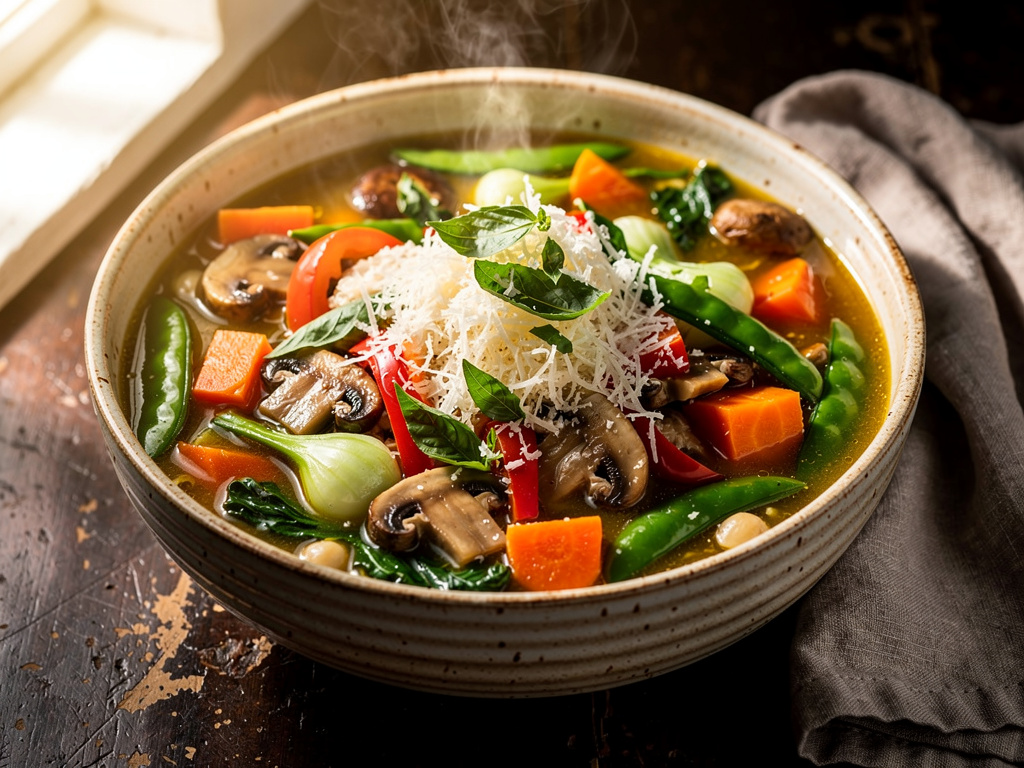
Asian Vegetable Soup
Light aromatic broth with bok choy, shiitake mushrooms, fresh ginger, and a splash of sesame oil. No...
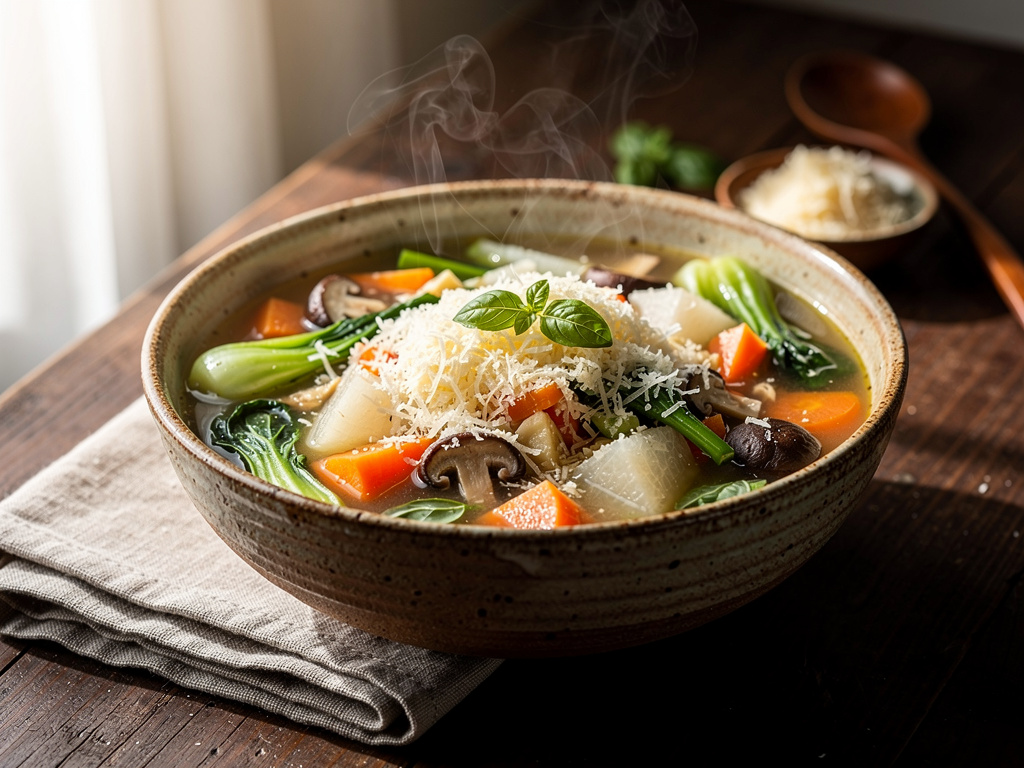
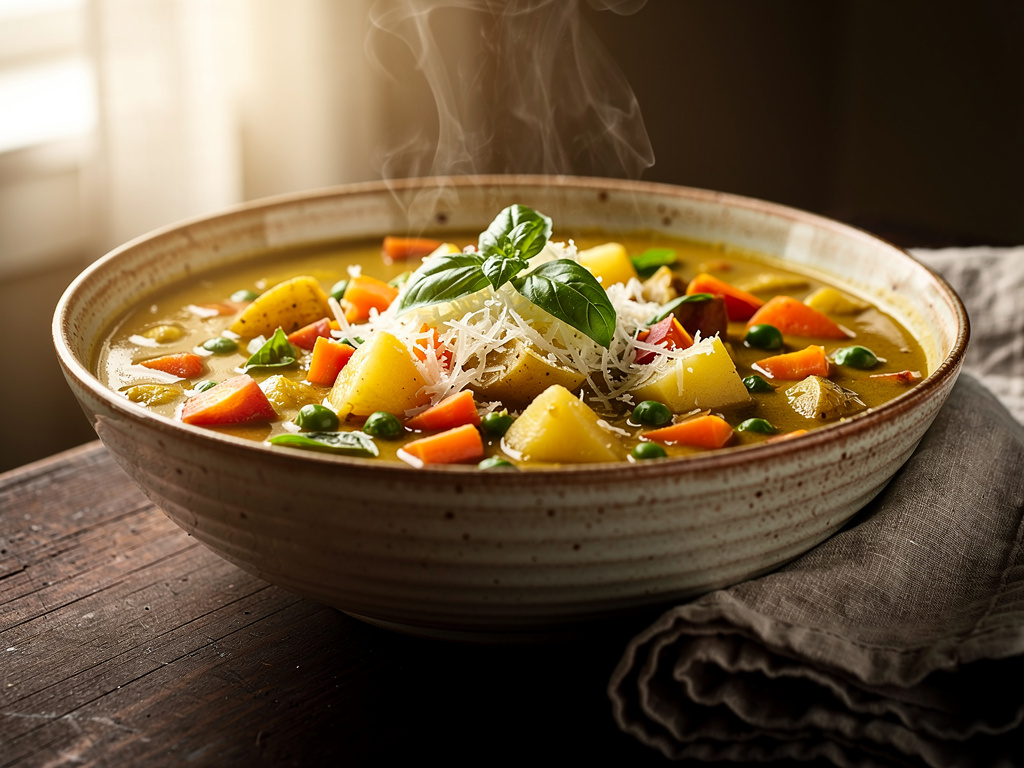
Curried Vegetable Soup
Warming, aromatic soup with curry powder, garam masala, cauliflower, chickpeas, spinach, and creamy ...