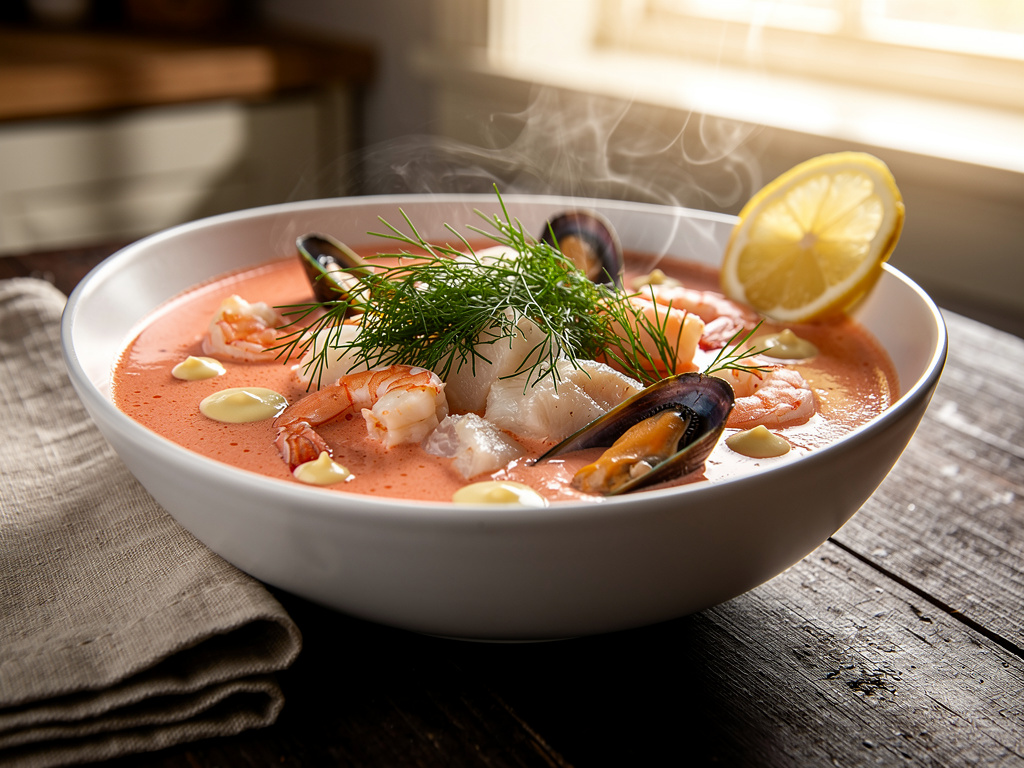
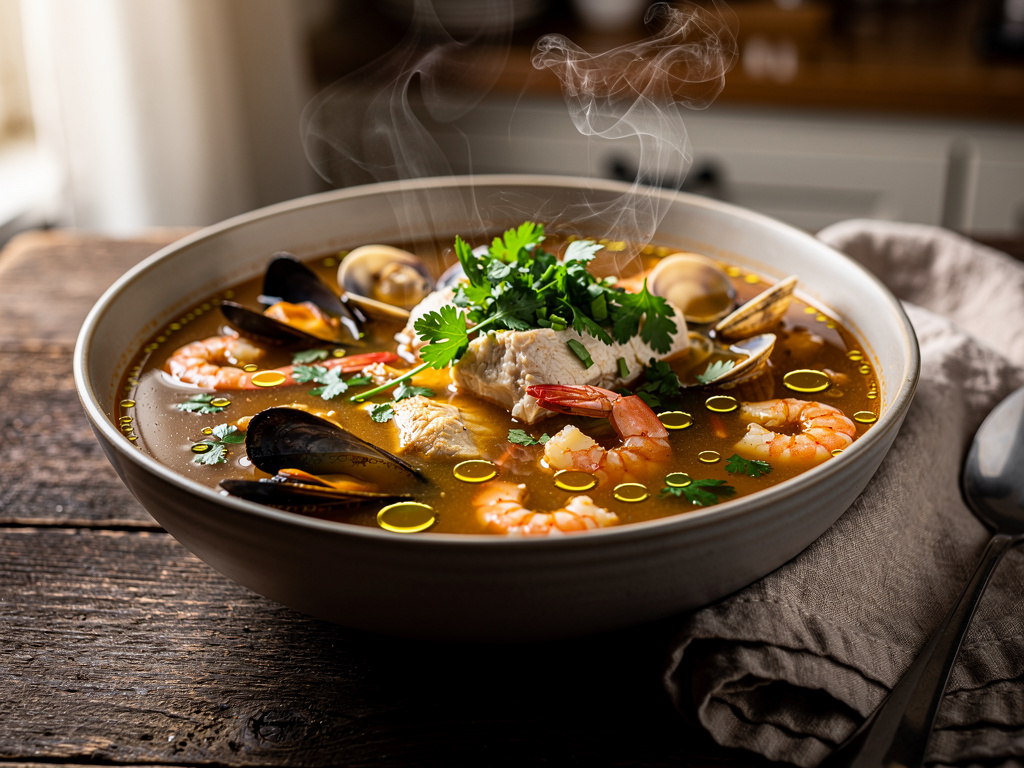
This Mediterranean seafood soup is a celebration of everything I love about coastal cooking. Saffron-infused broth shimmers golden in wide bowls, loaded with pink prawns, glistening mussels, and tender white fish, each serving crowned with a generous dollop of homemade lemon aioli. It's the kind of dish that transports you to a sun-drenched seaside terrace with every spoonful.
The soup draws inspiration from the great Mediterranean fish soups - French bouillabaisse, Italian cioppino, Spanish zarzuela - but stands beautifully on its own. What elevates it from merely good to truly spectacular is that homemade aioli. When you stir it into the hot broth, it melts into silky ribbons of garlicky, lemony richness that transform everything it touches.
The Art of Aioli
Aioli is arguably the Mediterranean's greatest contribution to the sauce world. At its purest, it's simply garlic emulsified with oil - but the technique requires patience and understanding. The magic happens when egg yolk acts as an emulsifier, allowing oil to suspend in tiny droplets that create that thick, creamy texture.
The key to perfect aioli is temperature and patience. Everything should be at room temperature - cold ingredients resist emulsification. Add the oil in the thinnest possible stream at first, literally drops at a time, until the emulsion takes hold. Only then can you increase the flow. Rush this process and you'll end up with a broken, oily mess.
Saffron: The Golden Thread
Saffron gives this soup its gorgeous golden hue and distinctive flavor - that unique combination of honey, hay, and something almost metallic that makes it instantly recognizable. It's the world's most expensive spice by weight, but a small amount creates enormous impact.
Blooming saffron in hot water is essential. This step releases the crocin (color compounds) and safranal (flavor compounds) far more effectively than adding dry threads to the pot. You'll see the water transform to brilliant orange within minutes - that's how you know good saffron.
Choosing Your Seafood
The trio of prawns, mussels, and white fish provides wonderful variety in texture and flavor. Here's what to look for:
- Prawns: Large green (raw) prawns with tails on look beautiful and cook quickly. The shells add flavor to the broth as they cook
- Mussels: Choose tightly closed mussels with intact shells. They should smell like the ocean, never fishy. Debeard just before cooking
- White fish: Firm-fleshed varieties like flathead, snapper, sea bass, or halibut hold up well. Cut into strips for quick, even cooking
Building Layers of Flavor
Great soup is about layering flavors at each stage. This recipe builds complexity through:
- Aromatics: Leek, celery, and garlic sautéed until fragrant create the foundation
- Vegetables: Carrot matchsticks and fresh tomatoes add sweetness and body
- Wine: Reducing white wine concentrates its flavor and adds acidity
- Saffron: The bloomed threads infuse everything with golden color and unique taste
- Seafood: Each type contributes its own character to the broth
- Aioli: Stirred in at the table, it adds richness and brings everything together
Essential Tips for Success
- Make aioli first: It needs time to rest and thicken, and making it with dry hands (before handling fish) is easier
- Bloom the saffron: Never skip this step - it's crucial for flavor and color extraction
- Reduce the wine properly: Cooking off the alcohol removes harshness and concentrates flavor
- Add seafood in stages: Mussels need slightly longer than prawns and fish
- Don't overcook: The seafood should be just done - residual heat will continue cooking
- Serve immediately: Seafood soup doesn't hold well; time it so you can serve the moment it's ready
Mussel Mastery
Mussels intimidate some home cooks, but they're actually one of the easiest shellfish to work with. The key is proper preparation:
- Scrub shells under cold water to remove any grit or barnacles
- Pull off the "beard" (the fibrous threads) by gripping and pulling toward the hinge
- Tap any open mussels - they should close within a few seconds. Discard any that don't
- Discard any with cracked shells or that feel unusually heavy (likely full of sand)
- After cooking, discard any that haven't opened
Serving Suggestions
This is dinner party food at its finest. Serve in wide, shallow bowls to showcase the beautiful seafood. Pass extra aioli at the table for those who want more richness. Crusty bread is absolutely essential - preferably a baguette or ciabatta for soaking up every drop of that golden broth.
For wine, choose something crisp and mineral - Muscadet, Vermentino, or Picpoul de Pinet are classic pairings. A dry Provence rosé also works beautifully. Keep the rest of the meal simple: perhaps a green salad to start, and fresh fruit for dessert.
Seafood Soup with Lemon Aioli
Elegant saffron-infused Mediterranean soup with prawns, mussels, and white fish, topped with homemade creamy lemon aioli.
Nutrition per serving
Ingredients
Instructions
- Make aioli. Blend egg yolk, mustard, lemon juice, and garlic. Gradually add olive oil in a thin stream until thick and pale.
- Soak saffron. Place saffron in boiling water and soak for 10 minutes to release color and flavor.
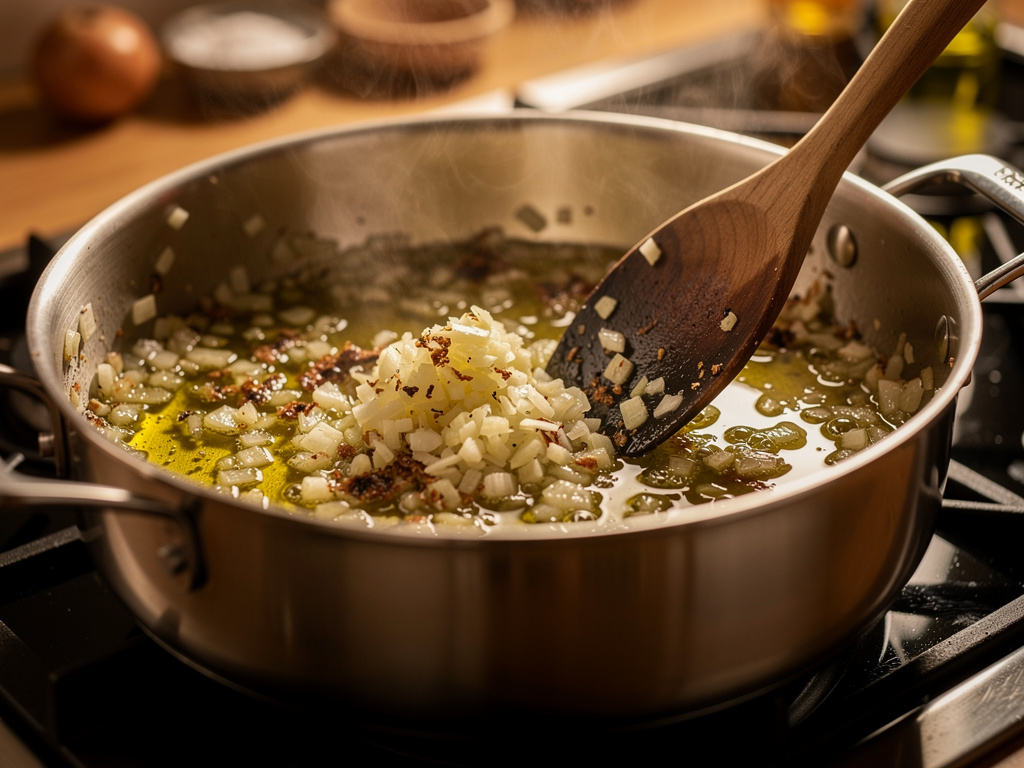
- Cook vegetables. Sauté leek, celery, and garlic for 2 minutes. Add carrot and tomato, cook 1 minute.
- Add wine and stock. Add wine and reduce by half. Add fish stock and saffron mixture. Bring to boil.
- Cook seafood. Add prawns and mussels, cook covered 4-5 minutes. Add fish and cook 1 minute more.
- Serve. Ladle into bowls, dividing seafood evenly. Top with generous dollops of lemon aioli.
Recipe Notes
- Discard closed mussels: Any mussels that don't open after cooking should be discarded - they were dead before cooking.
- Aioli safety: This recipe contains raw egg. Use pasteurized eggs if you're concerned, or if serving to pregnant women, children, or immunocompromised individuals.
- Make it bouillabaisse: Add more saffron and a splash of Pernod or pastis for authentic Marseille flavor.
- Make ahead: The aioli can be made up to 2 days ahead and refrigerated. The soup base (without seafood) can be prepared several hours ahead and reheated before adding seafood.
- Leftovers: Best eaten fresh, but leftover broth (without seafood) can be used as a base for fish risotto or pasta.
More Seafood Soups Recipes
Classic Split Pea Soup with Ham
Classic split pea soup with smoky ham hock. This hearty, protein-packed comfort food is budget-frien...
Shallot Soup
A refined, gourmet soup featuring delicate sweet shallots. French sophistication....
Sopa de Mariscos (Spanish Seafood Soup)
Traditional Spanish seafood soup with saffron-infused fish stock, white fish, prawns, squid, fresh t...