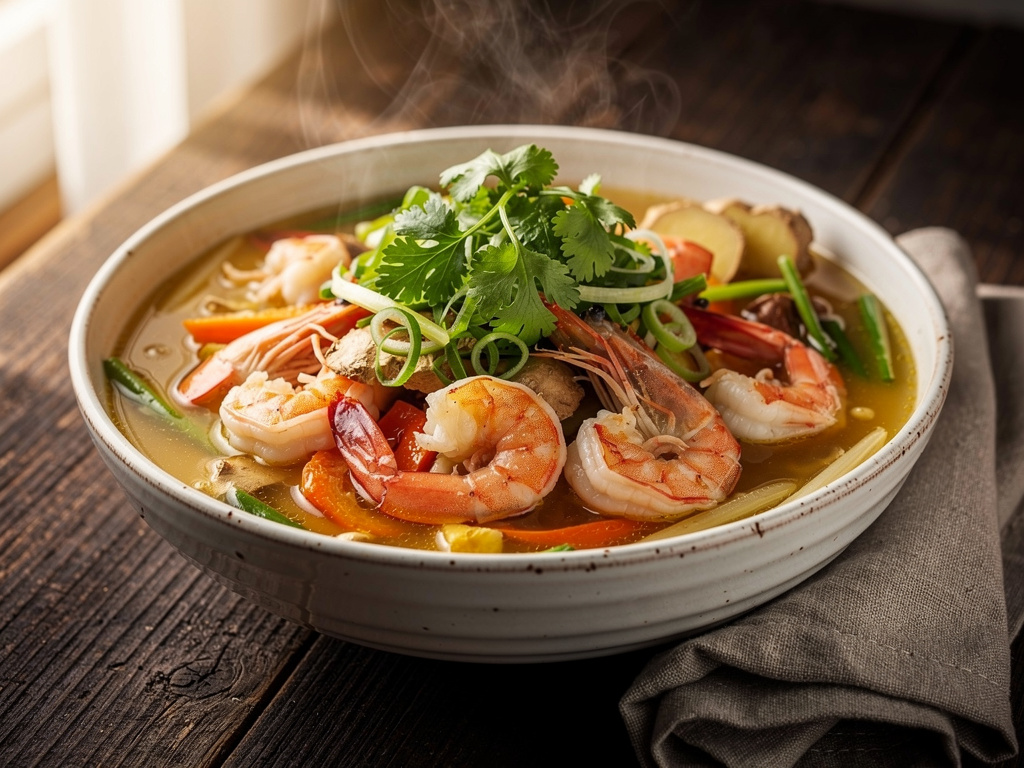
This Thai prawn soup with ginger showcases a technique that transforms ordinary ingredients into something extraordinary: making stock from prawn shells. Those shells you'd normally throw away contain an incredible concentration of flavor that creates the most deeply savory, aromatic soup base imaginable.
Combined with the warmth of fresh ginger, the citrus notes of lemongrass and kaffir lime leaves, and the final balance of fish sauce and lime juice, this soup delivers authentic Thai restaurant flavor from scratch. It's worth every minute of the 50-minute cook time.
The Magic of Prawn Shell Stock
Professional chefs know a secret that home cooks often miss: the shells are where the flavor hides. Prawn shells are packed with compounds that, when simmered, release an intense crustacean essence that you simply cannot replicate with store-bought stock.
The shells contain chitin, which breaks down during cooking to release glutamates - the same compounds responsible for the savory "umami" taste in aged cheeses and soy sauce. Additionally, the shells contain astaxanthin, a natural pigment that gives the stock a beautiful pink-orange hue.
When you combine shell stock with aromatic Thai ingredients, the result is something special. The broth carries both the deep seafood flavor and the bright, fresh notes of the aromatics. It's a symphony of taste that instant stock can never achieve.
Choosing and Preparing Your Prawns
For this recipe, buy prawns with shells on - you need them for the stock. Look for:
- Fresh or flash-frozen: Should smell like the ocean, never "fishy"
- Medium size: About 20-25 per pound works best
- Shells intact: Heads are a bonus - they add even more flavor to stock
- No black spots: These indicate age
When peeling, work over a bowl to catch any juices. The liquid from the prawns goes into the stock too. Devein the prawns by making a shallow cut along the back and removing the dark digestive tract.
Building Layers of Ginger Flavor
This recipe uses ginger in two stages for maximum impact. Half the ginger goes into the stock to infuse it with warm, spicy notes during the initial simmer. The remaining ginger is added later so you get both deeply infused flavor and fresh, punchy ginger pieces in the finished soup.
Choose fresh, firm ginger with smooth skin. Old ginger develops fibrous strands and diminished flavor. Slice it thin - about 2mm - so it can release maximum flavor without being unpleasantly chewy.
Essential Thai Aromatics
Three ingredients make this unmistakably Thai:
Lemongrass contributes a unique citrus-floral note that's both refreshing and exotic. Bruise the stalks with a heavy knife or mallet to release the aromatic oils trapped inside the fibrous exterior. Use only the bottom white portion, about 4-5 inches from the root.
Kaffir lime leaves add an incomparable fragrance - bright, floral, and distinctly citrus without being tart. Tear them before adding to maximize their aromatic contribution. These leaves are the defining scent of Thai cuisine.
Fresh chilies provide heat that can be adjusted to taste. Bird's eye chilies (prik kee noo) are traditional, but any fresh red chili works. Halving them releases flavor while keeping the heat controlled.
The Final Balance: Fish Sauce and Lime
Thai cooking is about balance, and the final seasoning brings everything together. Fish sauce adds salt and deep umami, while lime juice provides the characteristic Thai sourness. Always add these at the end, off the heat, to preserve their fresh flavors.
Start with less than the recipe suggests and add more to taste. The perfect balance depends on your personal preference and the intensity of your homemade stock. The soup should be salty enough to enhance flavors without tasting briny, and sour enough to be bright without puckering.
Straw Mushrooms: Traditional and Delicious
Straw mushrooms are the traditional choice for Thai soups. Their unique texture - silky exterior with a meaty center - absorbs the aromatic broth beautifully. Canned straw mushrooms, available at Asian grocers, work perfectly and are what most Thai restaurants use.
If you can't find straw mushrooms, substitute with oyster mushrooms, which have a similar tender texture, or button mushrooms cut in half. Each brings something slightly different but all work well.
Make-Ahead and Storage Tips
The prawn shell stock can be made up to 3 days ahead and refrigerated. In fact, the flavor improves as it rests. You can also freeze the stock for up to 3 months, making this weeknight-friendly if you do the stock work in advance.
The finished soup is best eaten immediately - prawns overcook when reheated. If you have leftovers, store the broth separately from the prawns and gently rewarm, adding fresh prawns each time you serve.
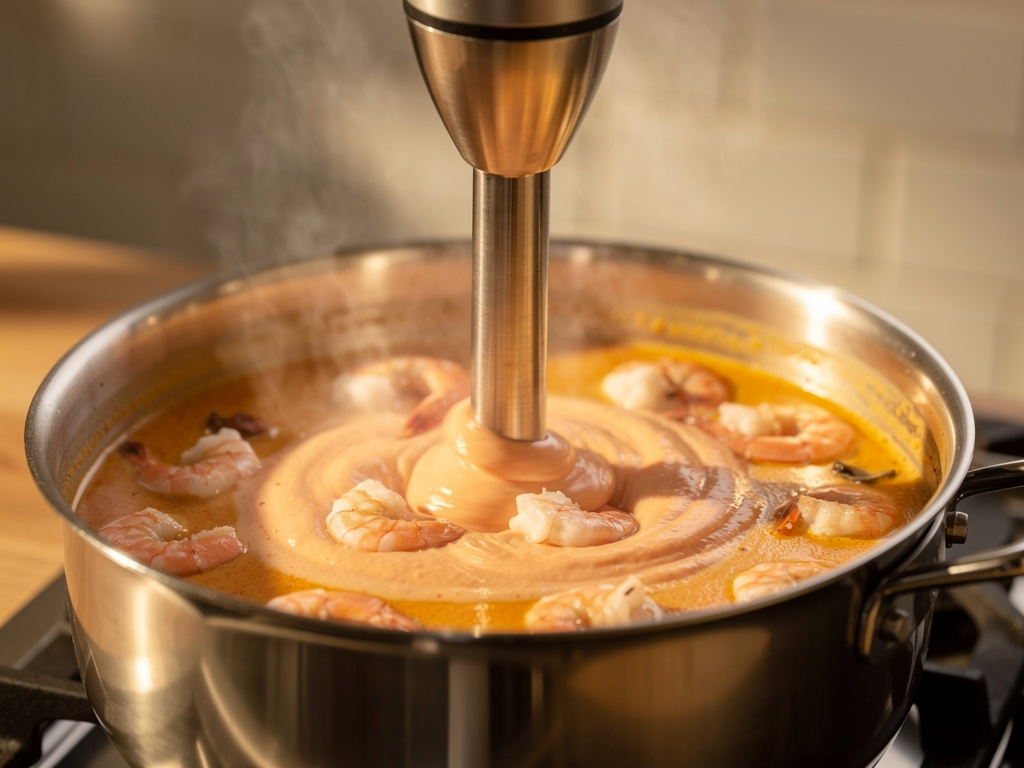
Thai Prawn Soup with Ginger
Authentic Thai prawn soup with homemade prawn shell stock, fresh ginger, lemongrass, kaffir lime leaves, and straw mushrooms. Deep flavor from scratch.
Nutrition per serving
Ingredients
Instructions
- Prepare prawns. Peel and devein the prawns, reserving shells and heads. Refrigerate prawn meat.
- Make prawn shell stock. Simmer prawn shells with water, half the ginger, garlic, and chilies for 20 minutes. Strain and discard solids.
- Infuse aromatics. Return stock to pot. Add remaining ginger, bruised lemongrass, and torn kaffir lime leaves. Simmer 5 minutes.
- Cook prawns. Add prawns and drained straw mushrooms. Cook 3 minutes until prawns turn pink.
- Season. Remove from heat. Add fish sauce and lime juice to taste.
- Serve. Ladle into bowls and garnish generously with fresh coriander.
Recipe Notes
- Tom Yum variation: Add 2 tablespoons tom yum paste for more intensity and heat.
- Mushroom options: Oyster or button mushrooms work if straw mushrooms aren't available.
- Tom Kha style: Stir in 1/2 cup coconut cream at the end for a rich, creamy version.
- Make-ahead stock: Prawn shell stock can be made 3 days ahead and refrigerated, or frozen for 3 months.
- Extra umami: Add a splash of light soy sauce along with the fish sauce for even deeper flavor.
More Seafood Soups Recipes
Pho Bo (Vietnamese Beef Noodle Soup)
This traditional beef pho recipe is a faithful guide to making Vietnam's most iconic noodle soup at ...
Goulash Soup
Hearty Hungarian-style beef soup with paprika, potatoes, and tomatoes. Perfect comfort food for cold...
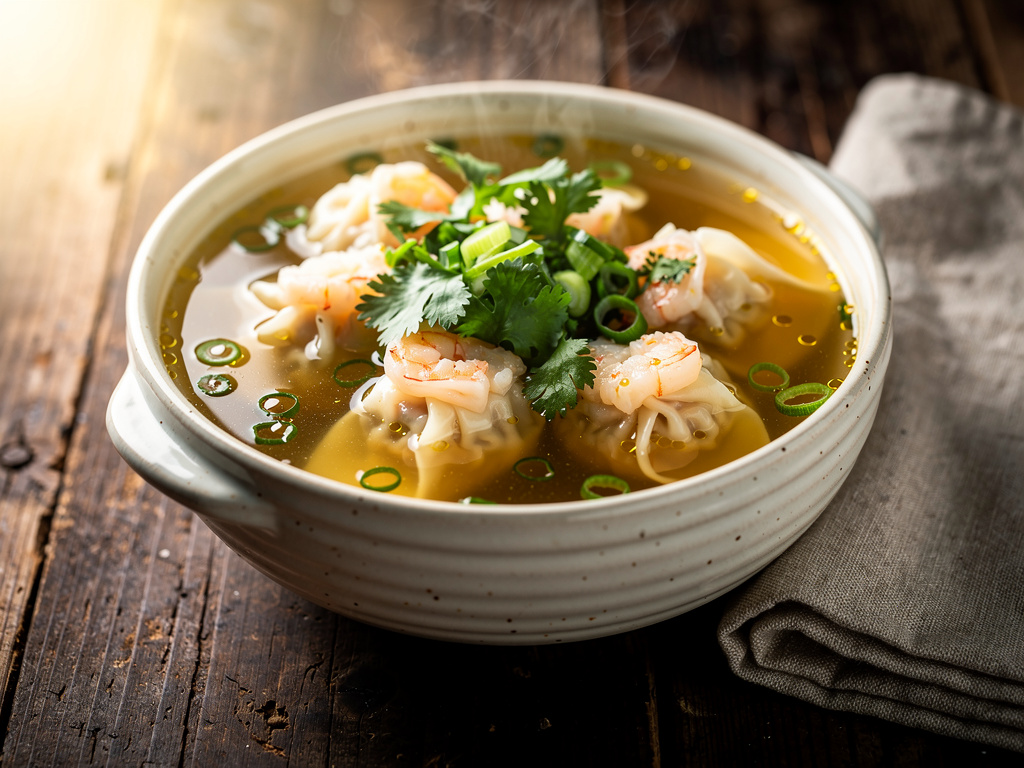
Prawn and Wonton Soup
Quick restaurant-quality Chinese soup with plump wontons, succulent prawns, Chinese BBQ pork, shiita...