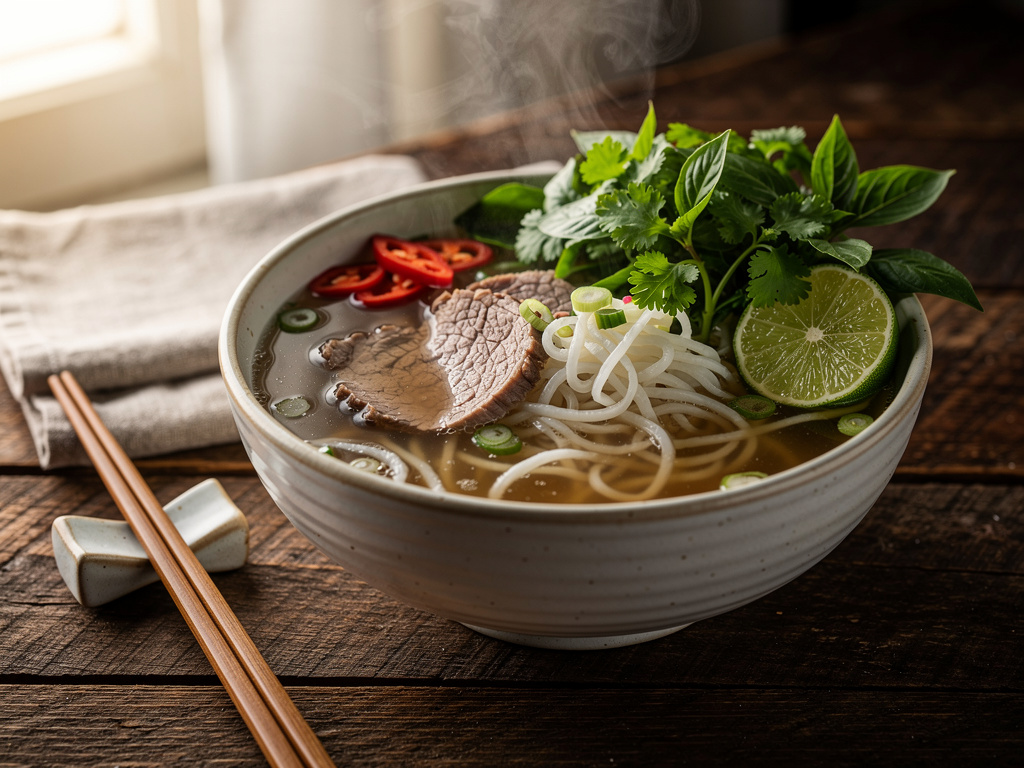
Pho Bo is Vietnam's iconic beef noodle soup — a symphony of aromatic spices, rich beef broth, silky rice noodles, and fresh herbs. The slow-simmered broth is the soul of this dish, infused with star anise, cinnamon, and charred ginger for an intoxicating aroma that fills your kitchen for hours.
While pho originated in northern Vietnam in the early 20th century, it has become one of the world's most beloved soups. The complex, fragrant broth is simultaneously light and deeply satisfying. The combination of textures — silky noodles, tender beef that cooks on contact with the hot broth, and crunchy bean sprouts — makes every bite interesting. This recipe respects the traditional technique while making it achievable in a home kitchen.
The Two Non-Negotiable Steps
Most home pho fails at two points: skipping the charring of aromatics and using untoasted spices. Both of these steps take less than 10 minutes total, and both make an enormous difference to the final broth.
Charring the onion and ginger caramelizes their natural sugars and creates a subtle smokiness that is genuinely irreplaceable. Do it over a high flame — in a dry cast-iron pan, under the broiler, or directly over a gas burner. You want real char, not just browning. The blackened bits dissolve into the broth and become part of its depth rather than a bitter note.
Toasting the whole spices in a dry pan for 2-3 minutes volatilizes their essential oils, making them far more aromatic and potent. Untoasted spices give you a faint version of the flavor; toasted spices give you the real thing. You'll smell the difference the moment they hit the hot pan.
The Art of Pho Broth
The signature spices that define traditional beef pho broth:
- Star anise — the most dominant note, providing that distinctive anise-like aroma
- Cinnamon sticks — Vietnamese cassia cinnamon is traditional; it's warmer and more complex than Ceylon
- Cloves — use sparingly, they can overwhelm; 4 is the upper limit
- Coriander seeds — adds citrusy, floral brightness to balance the warm spices
- Green cardamom — brings aromatic warmth without competing with the other spices
Simmer the broth at a gentle low simmer, never a hard boil. Hard boiling emulsifies the fat and makes the broth cloudy and greasy. You want a clear, golden, deeply fragrant broth.
Assembling the Bowl
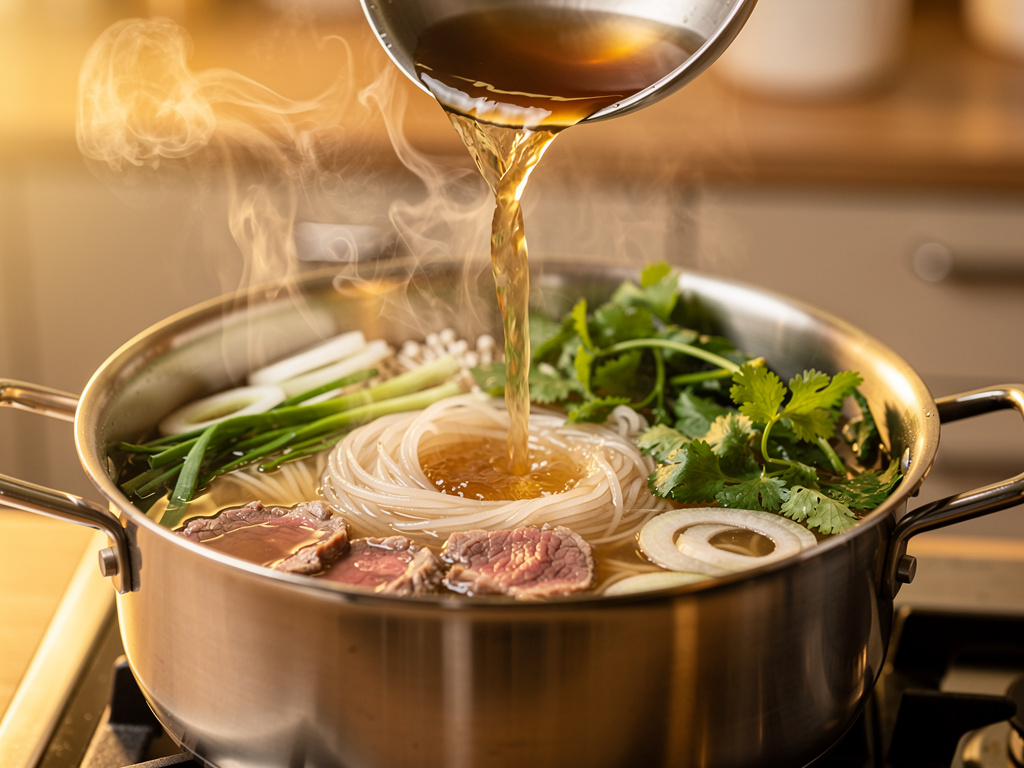
The assembly sequence matters. Warmed bowls first — cold bowls cool the broth too quickly. Noodles next. Then the raw beef on top of the noodles. Then the broth must be at a full rolling boil when poured — this is what cooks the beef on contact. Any less than extremely hot and the beef stays raw in the center.
Each diner then customizes their bowl with bean sprouts, herbs, chilli, and lime. Hoisin is served on the side for dipping beef, not added to the broth — that is a common Western adaptation, not the traditional way.
Make-Ahead and Storage
Pho broth is one of the best make-ahead recipes you can have. The broth improves over 2-3 days as flavors continue to develop. Refrigerate strained broth and the fat will solidify on the surface overnight — lift it off cleanly with a spoon for a dramatically cleaner, lighter broth. Freeze the broth in 2-cup portions for up to 3 months. Assemble bowls fresh each time from the reheated broth.
Traditional Beef Pho Recipe (Pho Bo) — Authentic Vietnamese
This traditional beef pho recipe is a faithful guide to making Vietnam's most iconic noodle soup at home. Pho Bo is built around three hours of patient broth work: beef bones simmered with charred onion and ginger, plus toasted star anise, cinnamon, cardamom, cloves, and coriander seeds. The result is a broth that's simultaneously clear, fragrant, and deeply savory — nothing like the murky, overseasoned versions you find in most restaurants outside Vietnam. Finished with fish sauce and fresh lime, ladled over silky rice noodles and paper-thin sliced beef that cooks on contact with the hot broth, each bowl becomes a personal creation as diners add fresh herbs, bean sprouts, and chilli to their own taste. The long cook time is the only investment — the technique itself is straightforward, and the payoff is a bowl that tastes like it took professional skill to make.
Nutrition per serving
Ingredients
Instructions
- Toast spices. In a dry skillet over medium heat, toast the star anise, cinnamon sticks, cardamom pods, coriander seeds, and cloves for 2-3 minutes, stirring, until fragrant. Set aside.
- Char aromatics. Place the onion halves and ginger slices cut-side down in the same dry skillet over high heat, or directly over a gas flame, until charred and lightly blackened, about 5 minutes.
- Make broth. Place beef bones, water, charred onion, charred ginger, and all toasted spices in a large stockpot. Bring to a boil, skimming any foam that rises. Reduce heat to a low simmer and cook for 3 hours, skimming occasionally.
- Strain and season. Strain broth through a fine-mesh strainer and discard solids. Return broth to the pot and season with fish sauce and lime juice. Taste and adjust.
- Prepare noodles. Place rice noodles in a large bowl and cover with boiling water. Soak for 5 minutes until just pliable, then drain.
- Assemble bowls. Divide noodles among warmed bowls. Top with the thinly sliced raw beef. Return broth to a rolling boil and ladle it over the beef — the very hot broth will cook the beef instantly.
- Serve. Bring each bowl to the table and let diners add their own bean sprouts, mint, coriander, chilli, and lime. Serve hoisin and sriracha on the side.
Recipe Notes
- Char aromatics: Don't skip this step — charring the onion and ginger is essential for authentic pho flavor.
- Toast spices first: Dry-toast whole spices 2-3 minutes until fragrant before adding to the pot.
- Slice beef thin: Partially freeze the beef fillet for 30 minutes to make thin slicing much easier.
- Make ahead: Broth can be made 2-3 days ahead and refrigerated. The fat will solidify on top for easy removal.
More Beef Recipes
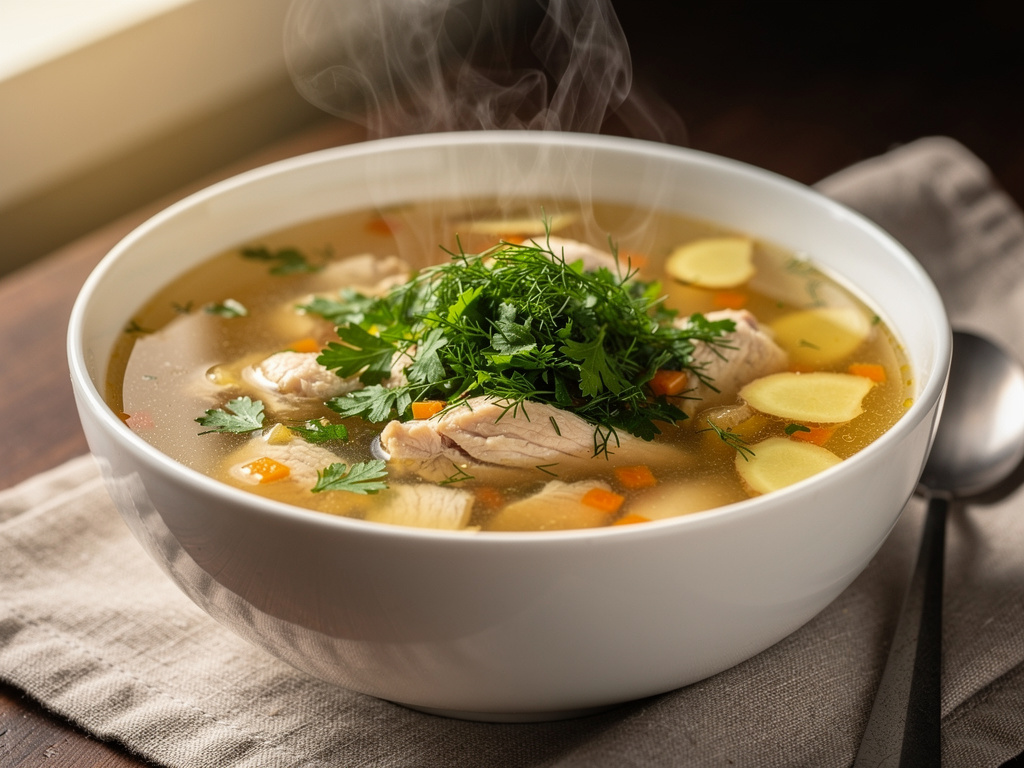
Ginger Chicken Soup
This recipe for ginger chicken soup is the soup you want when you're fighting a cold, when it's Janu...
Pho Ga (Chicken Pho)
undefined...
Homemade Ramen
undefined...