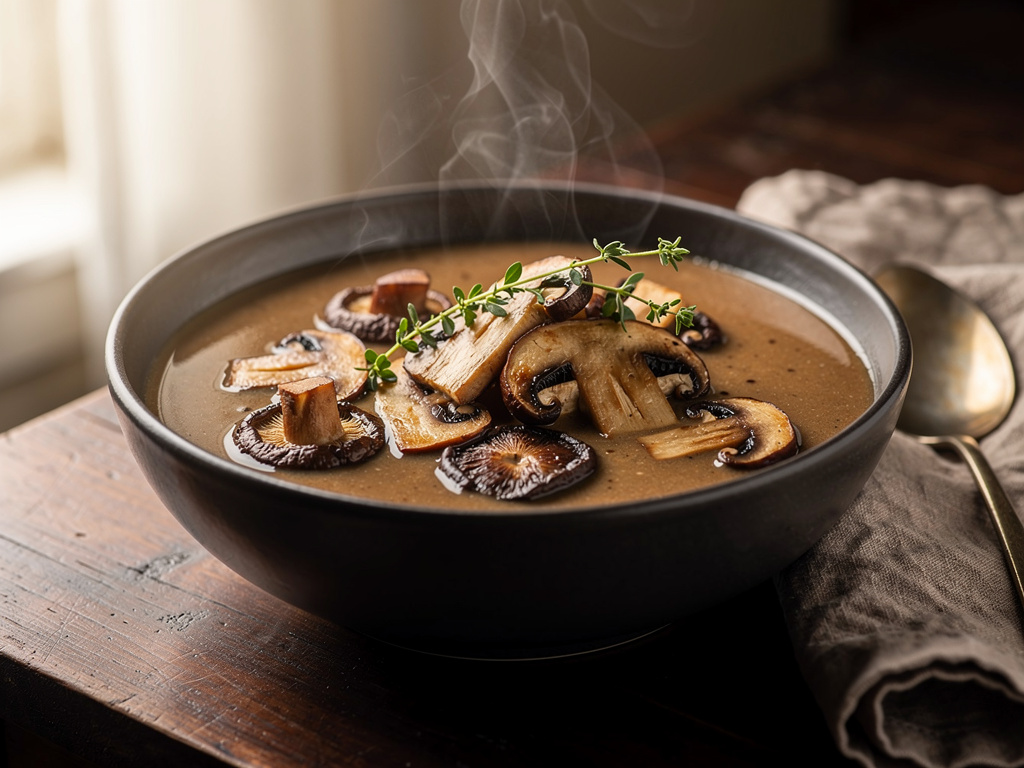
There's something magical that happens when earthy mushrooms meet the deep, complex flavors of miso paste in a steaming bowl of soup. This miso mushroom soup isn't just another Japanese-inspired dish—it's a masterclass in umami layering that transforms simple ingredients into liquid comfort food. The silken tofu adds clouds of protein while wakame seaweed brings an authentic taste of the ocean, creating a symphony of flavors that warm you from the inside out.
Rooted in Japanese culinary tradition, this soup represents the beautiful philosophy of using fermented ingredients to enhance natural flavors. Miso, a fermented soybean paste that can age for years, transforms ordinary mushroom broth into something extraordinary. Unlike heavy cream-based soups, this recipe celebrates the pure essence of each ingredient while delivering satisfying warmth and nutrition that makes it perfect for any season.
The Art of Umami Layering in Miso Mushroom Soup
What sets this recipe apart is its sophisticated approach to building umami—that savory "fifth taste" that makes food deeply satisfying. The combination of dashi broth, miso paste, and mixed mushrooms creates three distinct layers of umami that complement rather than compete with each other. The dashi provides a clean, oceanic foundation, while the mushrooms contribute an earthy richness. The miso paste acts as the flavor bridge, its fermented complexity tying everything together with notes that range from sweet to salty to deeply savory. This isn't accidental—it's the result of centuries of Japanese culinary wisdom that understood how these ingredients work in harmony long before we had scientific terms for umami compounds.
Key Ingredients & What Makes Them Special
The star of this soup is undoubtedly the mixed mushroom trio of shiitake, enoki, and oyster mushrooms. Each brings unique characteristics: shiitake provides meaty texture and intense flavor, enoki adds delicate bite and visual appeal, while oyster mushrooms contribute subtle sweetness. This combination ensures every spoonful offers varied textures and complementary flavors that keep the soup interesting from first taste to last.
White miso paste deserves special attention as the soul of this recipe. Unlike its darker, more intense cousins, white miso (shiro miso) offers gentle sweetness balanced with complex fermented notes. It dissolves smoothly into hot broth without overwhelming the delicate mushroom flavors, making it perfect for this application. The key is dissolving it properly—never boil miso directly, as high heat can destroy its beneficial probiotics and create bitter flavors.
Wakame seaweed might seem like a minor player, but it's crucial for authenticity and nutrition. This dried sea vegetable rehydrates beautifully in hot broth, adding minerals, subtle ocean flavors, and an appealing texture contrast. It also provides natural glutamates that enhance the overall umami profile of the soup.
Pro Tips for the Best Results
- Don't overcook the mushrooms during the initial sauté—they should be golden but still firm, as they'll continue cooking in the broth
- Dissolve miso in a small bowl first with a ladleful of warm broth before adding to the pot, ensuring smooth integration without lumps
- Add silken tofu at the very end and handle gently to prevent breaking—it only needs to warm through, not cook
- Taste and adjust the miso gradually, as different brands vary significantly in saltiness and intensity
- Serve immediately for the best texture contrast between tender mushrooms and silky tofu
Variations & Substitutions
For a vegan version, ensure your dashi is kombu-based rather than bonito, or use high-quality vegetable broth enhanced with a strip of kombu seaweed. Those avoiding soy can substitute coconut aminos for some of the miso's saltiness, though you'll lose the fermented complexity. Mushroom lovers can experiment with maitake, cremini, or even dried shiitake for more intense flavor. If wakame isn't available, nori sheets torn into pieces work as a substitute, though the texture will be different. For extra richness, a drizzle of quality sesame oil just before serving adds aromatic depth.
Serving Suggestions
This soup shines as a light lunch paired with onigiri (rice balls) or simple sushi rolls. For dinner, serve alongside tempura vegetables or a fresh cucumber sunomono salad for textural contrast. The soup also makes an elegant starter course before dishes like teriyaki salmon or chicken katsu. Consider adding cooked soba or udon noodles directly to the bowl for a more substantial meal. A sprinkle of toasted sesame seeds and a few drops of chili oil can elevate the presentation while adding complementary flavors.
Storage & Make-Ahead Tips
This soup is best enjoyed fresh, but you can prepare components ahead for quick assembly. Store the mushroom-dashi base covered in the refrigerator for up to three days, but wait to add miso, tofu, and green onions until reheating. When reheating, warm gently over medium-low heat—never boil—to preserve the miso's beneficial properties. The wakame can be soaked ahead and stored separately. If you must store completed soup, consume within 24 hours and reheat very gently, though the tofu texture may change slightly. For meal prep, consider keeping ingredients separate and assembling individual portions as needed for optimal freshness and texture.
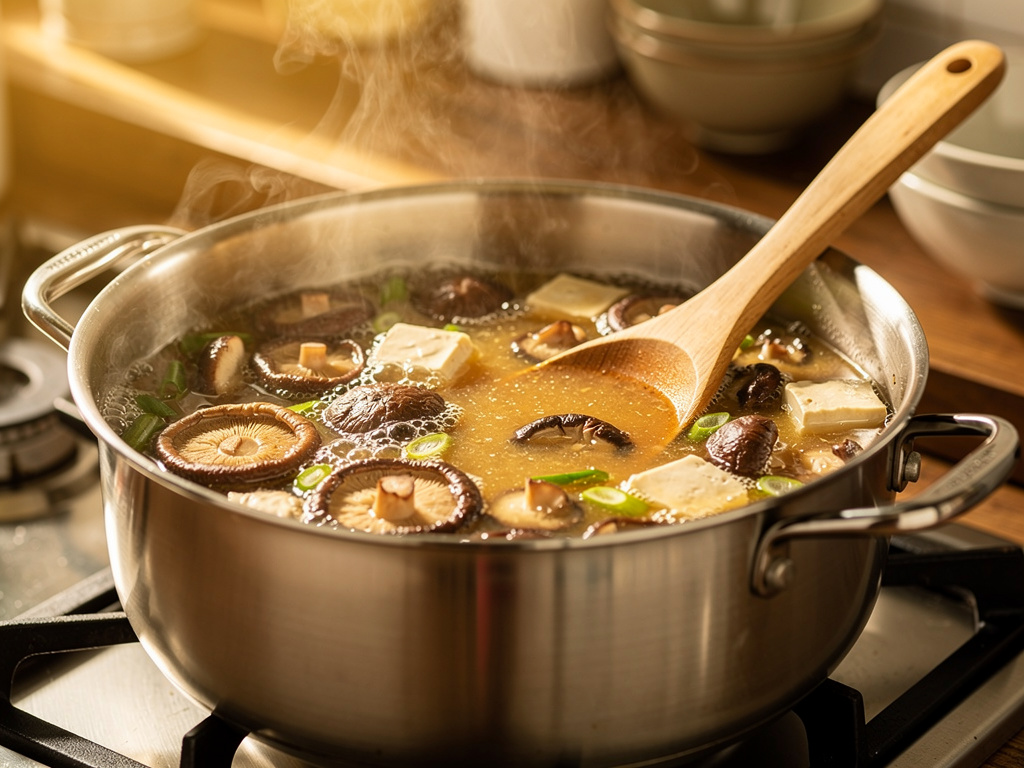
Miso Mushroom Soup
A warming Japanese-inspired soup featuring umami-rich miso and tender mushrooms. Healthy comfort food.
Nutrition per serving
Ingredients
Instructions
- . Sauté mushrooms briefly.
- . Add dashi and bring to simmer.
- . Dissolve miso into soup.
- . Add tofu and green onions. Serve.
Recipe Notes
- Don't boil miso: Kills probiotics and becomes bitter.
- Red miso: Use for stronger, saltier flavor.
- Add noodles: Udon or soba make it a meal.
- Storage: Best fresh. Miso loses flavor when reheated.
More Mushroom Soups Recipes
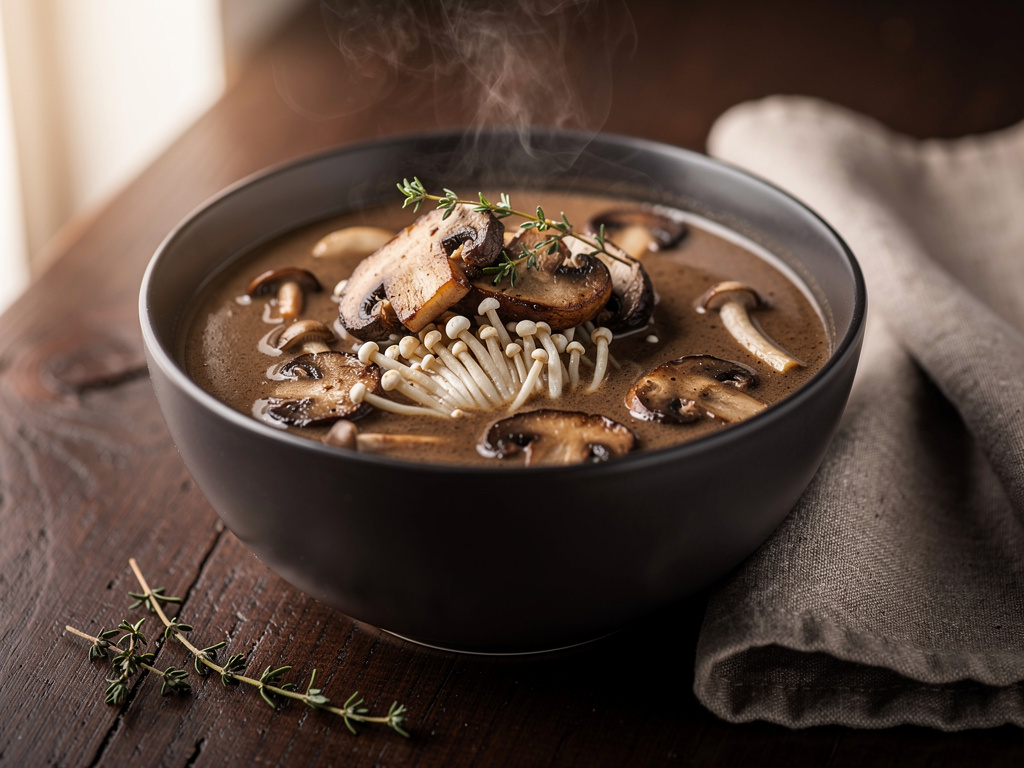
Enoki Mushroom Soup
A light, elegant Asian-style soup featuring delicate enoki mushrooms. Clean flavors and beautiful pr...

Fish and Ramen Noodle Soup
Light Japanese-inspired soup with tender white fish, ramen noodles, fresh ginger, and a savory soy b...
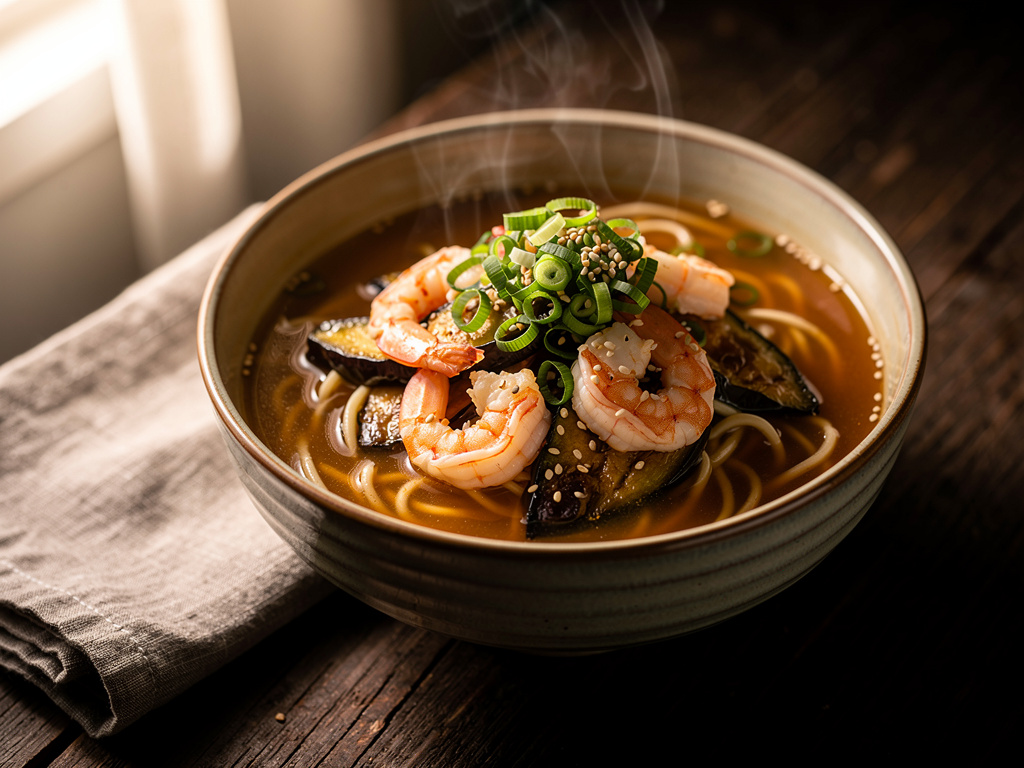
Miso Soup with Prawns and Eggplant
Quick, umami-rich Japanese miso soup with silky eggplant, succulent prawns, and fresh Asian greens. ...