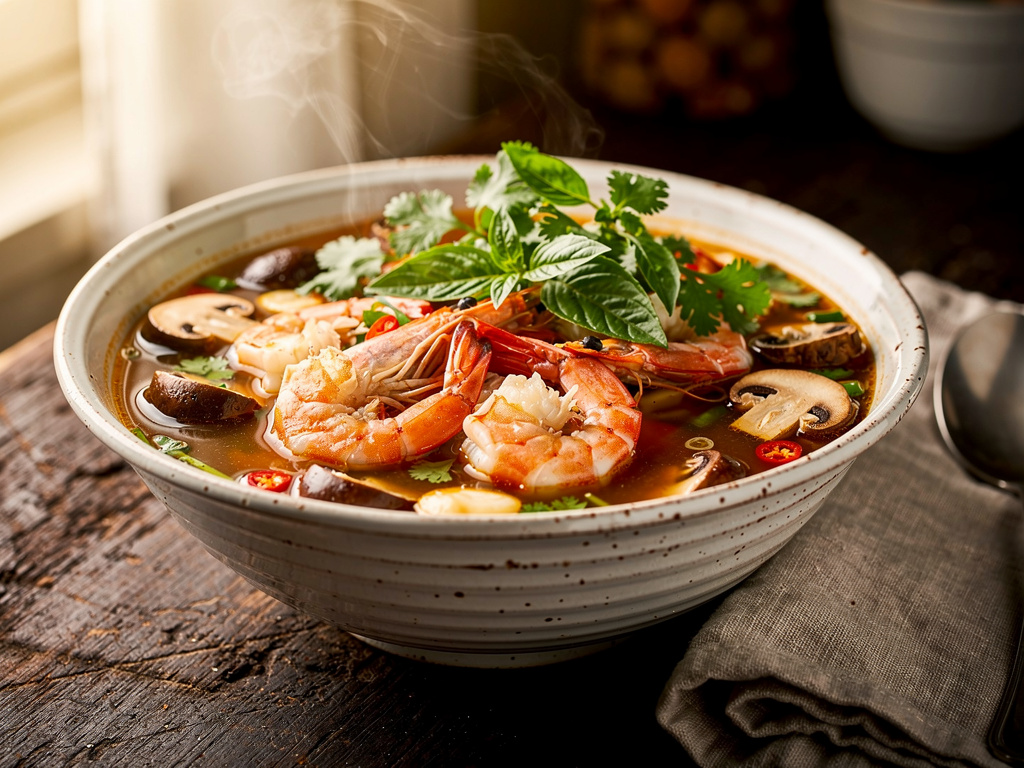
Tom Yum Goong is Thailand's most iconic soup, a perfect balance of sour, spicy, salty, and aromatic flavors that has captivated taste buds worldwide. This hot and sour prawn soup combines succulent prawns with the holy trinity of Thai aromatics: lemongrass, galangal, and kaffir lime leaves. Every spoonful delivers an explosion of fresh, vibrant flavors that simply can't be replicated with any other cuisine.
The name tells you everything: "Tom" means boiling, "Yum" means mixing or spicy salad, and "Goong" means prawns. Together, it creates a soup that's been a cornerstone of Thai cuisine for generations, loved equally in humble street stalls and Michelin-starred restaurants.
The Secret to Authentic Tom Yum Flavor
What separates restaurant-quality Tom Yum from mediocre attempts is understanding how each ingredient contributes to the final dish. Unlike Western soups where ingredients meld together, Tom Yum maintains distinct, bright flavors that hit your palate in waves.
Lemongrass provides the citrusy backbone. Always bruise it before adding to release the aromatic oils trapped inside the fibrous stalks. Use only the bottom white part - about 5 inches from the root - where the flavor concentrates.
Galangal delivers a sharp, almost medicinal pine-like flavor that's essential to authentic Tom Yum. While ginger works as a substitute, galangal's unique profile is irreplaceable for true Thai flavor. Find it at Asian grocers, frozen if not fresh.
Kaffir lime leaves contribute an unmistakable floral citrus aroma. Tear them before adding to maximize essential oil release. These leaves are the soul of Tom Yum - don't skip them.
Tom Yum Nam Sai vs Nam Khon: Two Styles
This recipe creates Tom Yum Nam Sai, the clear broth version that showcases the pure, clean flavors of the aromatics. It's the traditional style and what most Thai people eat at home.
Tom Yum Nam Khon is the creamy, orange-red version popular in Bangkok restaurants. It includes nam prik pao (roasted chilli paste) and evaporated milk, creating a richer, more photogenic soup. Both are authentic - they're simply different regional preferences.
Why Coriander Root Matters
Most Western recipes call for coriander leaves only, but Thai cooking values the entire plant. The roots pack the most intense flavor - earthy, concentrated coriander essence that creates an aromatic foundation for the broth. Asian grocers sell coriander with roots attached; it's worth seeking out.
If you can only find regular coriander, use the stems finely chopped as a substitute. They contain more flavor than the leaves and approximate the root's contribution.
The Art of Balancing Flavors
Tom Yum's magic lies in balancing four key elements:
- Sour from fresh lime juice (added at the end)
- Salty from fish sauce
- Spicy from fresh Thai chillies
- Aromatic from lemongrass, galangal, and kaffir lime
The key is adding lime juice only after removing from heat. Heat destroys lime juice's fresh, bright character, leaving only flat sourness. Always season at the end and taste repeatedly - the perfect balance is personal.
Choosing the Right Prawns
For Tom Yum Goong, use green (raw) prawns in their shells if possible. The shells add extra flavor to the broth, and you can peel them at the table. If using peeled prawns, save the shells to simmer in the stock before adding the aromatics.
Size matters less than freshness. Medium prawns (about 20 per pound) cook quickly and evenly, but larger tiger prawns make for a more impressive presentation. Whatever you choose, don't overcook - prawns are done when they turn pink and curl into a loose "C" shape.
Traditional Accompaniments
In Thailand, Tom Yum is served as part of a larger meal with steamed jasmine rice. The soup's intense flavors are meant to complement blander dishes. Some people add rice directly to their soup bowl, while purists enjoy it separately.
For a more substantial meal, serve with rice noodles or add them directly to the soup for Tom Yum noodle soup, a popular street food variation.
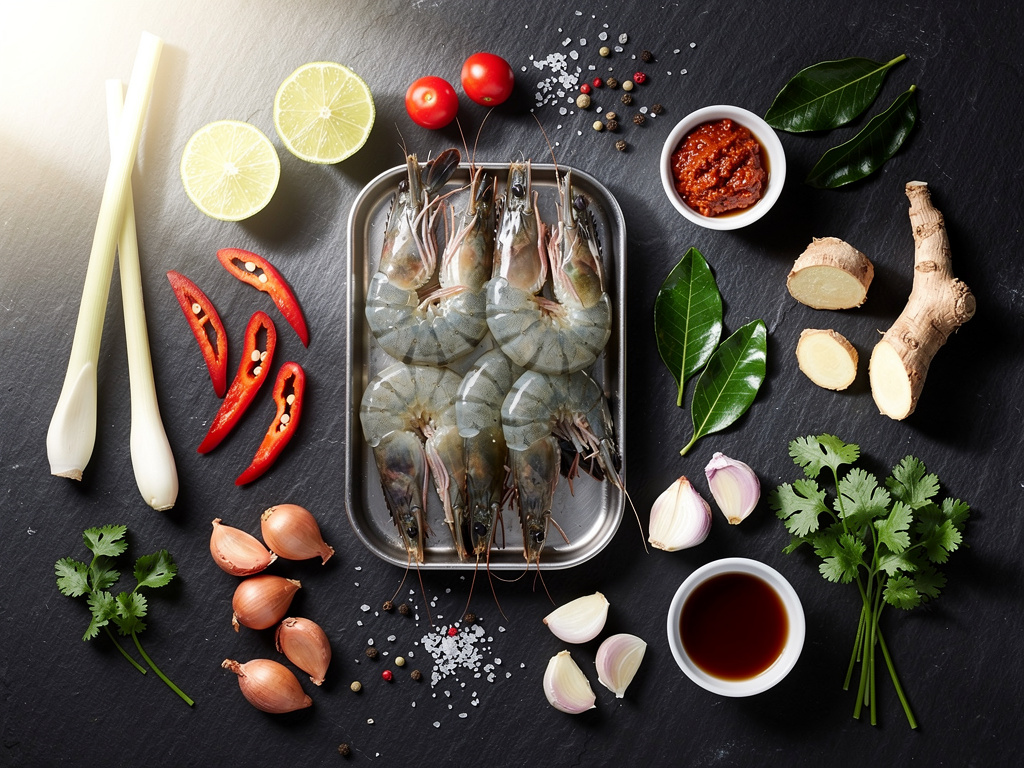
Tom Yum Goong (Hot and Sour Prawn Soup)
Authentic Thai Tom Yum Goong with juicy prawns, aromatic lemongrass, kaffir lime leaves, galangal, mushrooms, and fresh lime juice.
Nutrition per serving
Ingredients
Instructions
- Prepare aromatics. Cut roots from coriander about 3cm along the stem. Wash well and chop finely. Reserve leaves for garnish. Bruise lemongrass with a knife or mallet.
- Infuse broth. Bring chicken stock to boil in a large pot. Add coriander roots, lemongrass, kaffir lime leaves, galangal, garlic, and fish sauce. Reduce heat and simmer 10 minutes.
- Add prawns and mushrooms. Add prawns, mushrooms, and shallots. Cook for 2-3 minutes until prawns turn pink and curl.
- Season and serve. Remove from heat. Add lime juice and sliced chilli to taste. Ladle into bowls and garnish with fresh coriander leaves.
Recipe Notes
- Tom Yum Nam Khon (creamy version): Add 2-3 tablespoons nam prik pao (roasted chilli paste) and 1/2 cup evaporated milk or coconut cream for the restaurant-style orange-red soup.
- Mushroom options: Straw mushrooms are traditional. Oyster mushrooms or king trumpet mushrooms also work beautifully.
- Make it milder: Remove chilli seeds completely, or omit chillies and let diners add their own.
- Add more protein: Include squid, fish balls, or tofu for variety.
- Stock tip: For deeper flavor, use homemade prawn stock made by simmering the prawn shells before adding to the recipe.
More Seafood Soups Recipes
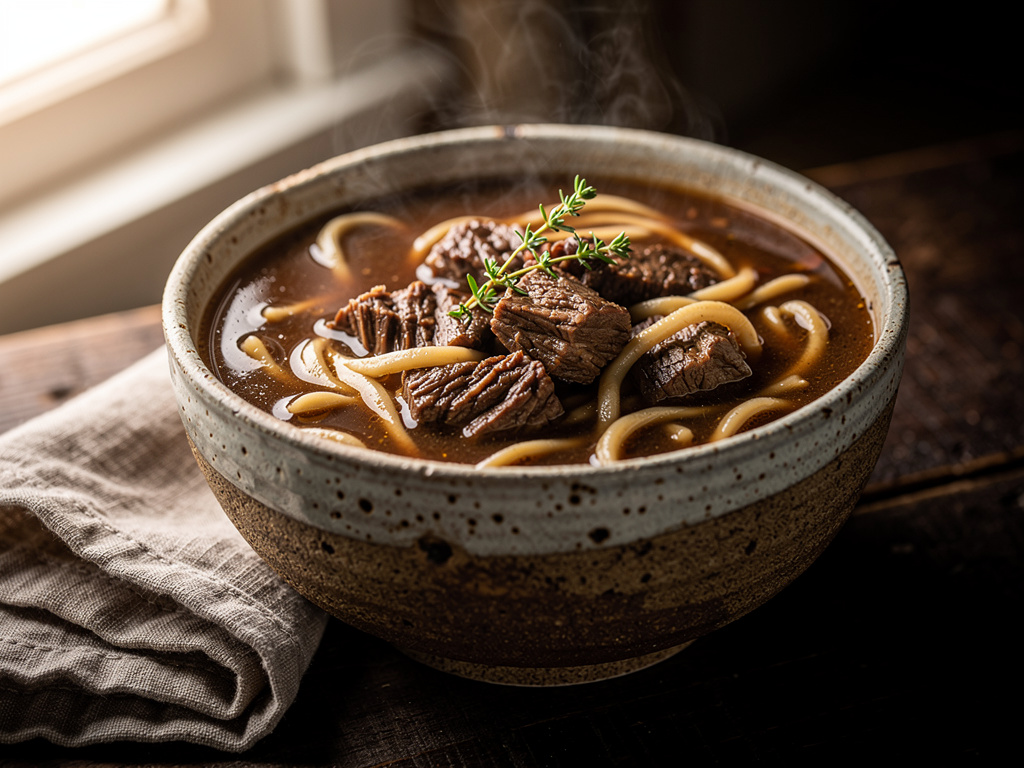
Vietnamese Beef Noodle Soup
Authentic Vietnamese-style beef noodle soup with slow-simmered bone broth, aromatic spices like star...
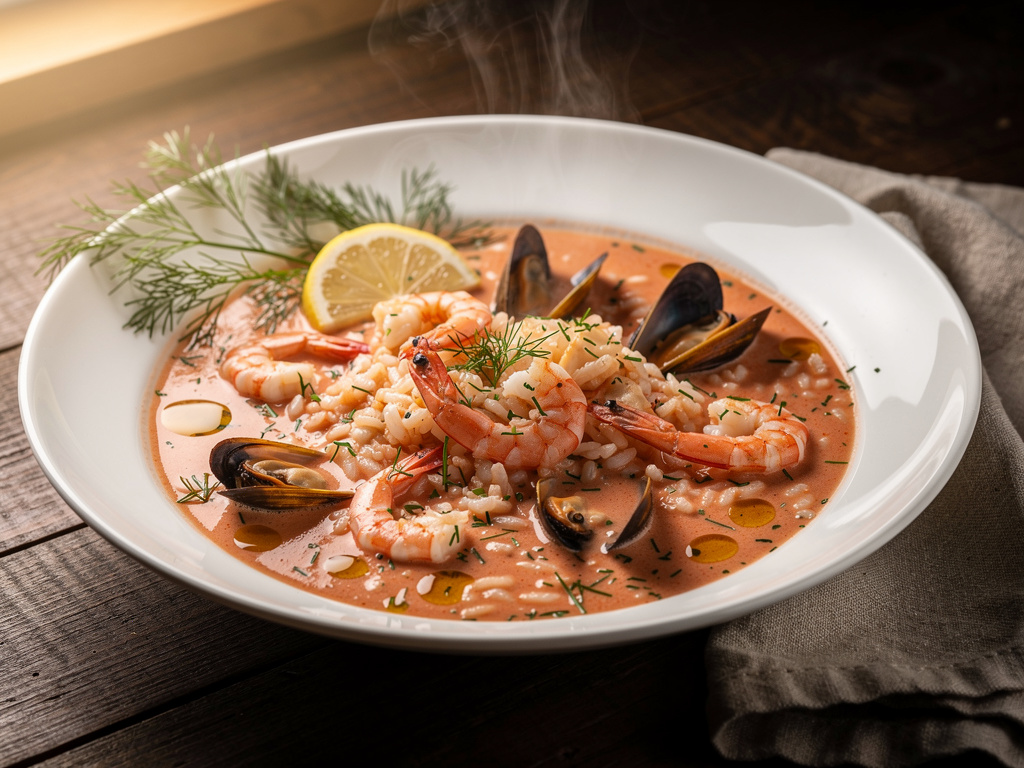
Sopa de Arroz y Pescado (Spanish Seafood Rice Soup)
Authentic Spanish seafood and rice soup with salmon, prawns, squid, and chorizo in a rich tomato bro...
Goulash Soup
Hearty Hungarian-style beef soup with paprika, potatoes, and tomatoes. Perfect comfort food for cold...