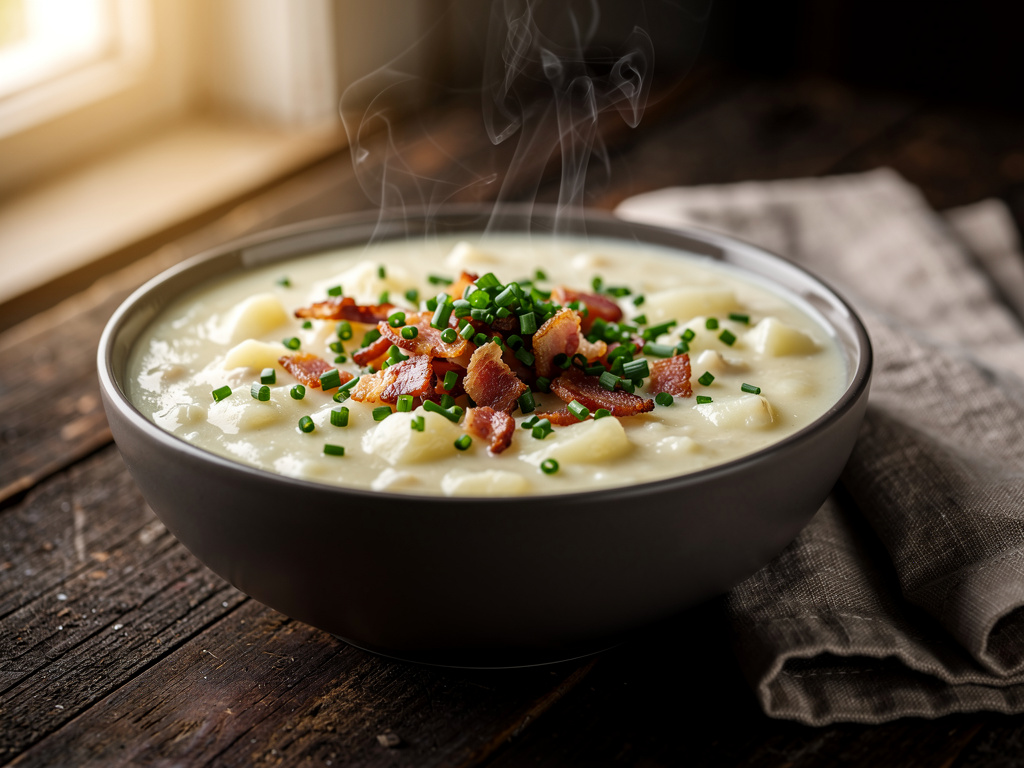
There's something magical that happens when two humble pantry staples—potatoes and garlic—come together in perfect harmony. This garlic potato soup transforms these everyday ingredients into a luxuriously creamy, aromatic bowl of comfort that will make your kitchen smell like a five-star restaurant. The secret lies in roasting two entire heads of garlic until they become sweet, caramelized, and utterly irresistible, then blending them with tender potatoes to create a soup that's both rustic and refined.
While potato soup appears in countless cuisines around the world, this particular version elevates the classic with an abundance of roasted garlic that mellows into sweet, nutty perfection. The technique of roasting whole garlic heads before incorporating them into the soup is what sets this recipe apart from ordinary potato soups. This method, popularized in Mediterranean cooking, transforms the sharp bite of raw garlic into something completely different—creamy, almost buttery, and surprisingly sweet. It's a technique that professional chefs have long used to add depth without overwhelming heat.
The Magic of Roasted Garlic Transformation
Roasting garlic at 400°F for 40 minutes performs a complete flavor metamorphosis that's nothing short of culinary alchemy. During this slow roasting process, the garlic's natural sugars caramelize while the harsh sulfur compounds that create that sharp "bite" break down into mellow, complex flavors. The cloves become so soft and creamy that they practically melt into the soup, creating an incredibly smooth texture when pureed. This roasted garlic doesn't just add flavor—it becomes an integral part of the soup's velvety body, contributing both taste and texture in a way that raw or sautéed garlic simply cannot match.
Key Ingredients & What Makes Them Special
The star of this soup is undoubtedly the two heads of roasted garlic, which might seem excessive but is absolutely perfect. Each head contains 10-12 cloves, and when roasted, they become mild enough that this quantity adds richness rather than overwhelming heat. Choose firm, plump heads without any green shoots for the best flavor.
Your choice of potatoes significantly impacts the final texture. Russet potatoes are ideal here because their high starch content breaks down beautifully during cooking, creating that naturally thick, creamy consistency without needing excessive cream or flour-based thickeners. The 2 pounds called for in this recipe provides the perfect potato-to-liquid ratio for a soup that's substantial but not gluey.
The fresh thyme adds an earthy, floral note that complements both the sweet roasted garlic and the creamy potatoes. Unlike dried thyme, fresh thyme leaves release their oils gradually during cooking, infusing the entire soup with subtle herbal complexity that ties all the flavors together.
Pro Tips for the Best Results
- Roast garlic in advance: Roasted garlic heads can be prepared up to three days ahead and stored in the refrigerator, making this soup perfect for meal planning
- Don't skip the peeling step: Remove potato skins before cooking for the silkiest texture, as skins can create a grainy consistency even when pureed
- Puree in batches: Never fill your blender more than halfway with hot soup to avoid dangerous splattering—the steam expansion can cause the lid to blow off
- Temper the cream: Add a ladle of hot soup to your cream before incorporating it to prevent curdling from temperature shock
- Season at the end: Wait until after pureeing to add your final salt and pepper adjustments, as flavors concentrate during the blending process
Variations & Substitutions
For a dairy-free version, substitute the heavy cream with full-fat coconut milk or cashew cream—both provide richness without competing with the garlic flavor. Vegetarian cooks can easily swap the chicken broth for vegetable stock, though adding a tablespoon of nutritional yeast will help replace some of the umami depth that chicken broth provides.
Texture lovers can reserve some diced potatoes before pureeing to stir back in for a chunky consistency. For extra richness, try adding a few tablespoons of cream cheese or mascarpone along with the heavy cream. Fresh herbs beyond thyme work beautifully here—try rosemary for earthiness or sage for a more sophisticated flavor profile.
Serving Suggestions
This soup begs for crusty bread to soak up every drop—try garlic bread for a playful doubling-down on the theme, or serve with sourdough toast drizzled with good olive oil. A simple arugula salad with lemon vinaigrette provides a peppery contrast to the soup's richness. For a more substantial meal, serve alongside grilled cheese sandwiches made with sharp cheddar or gruyere.
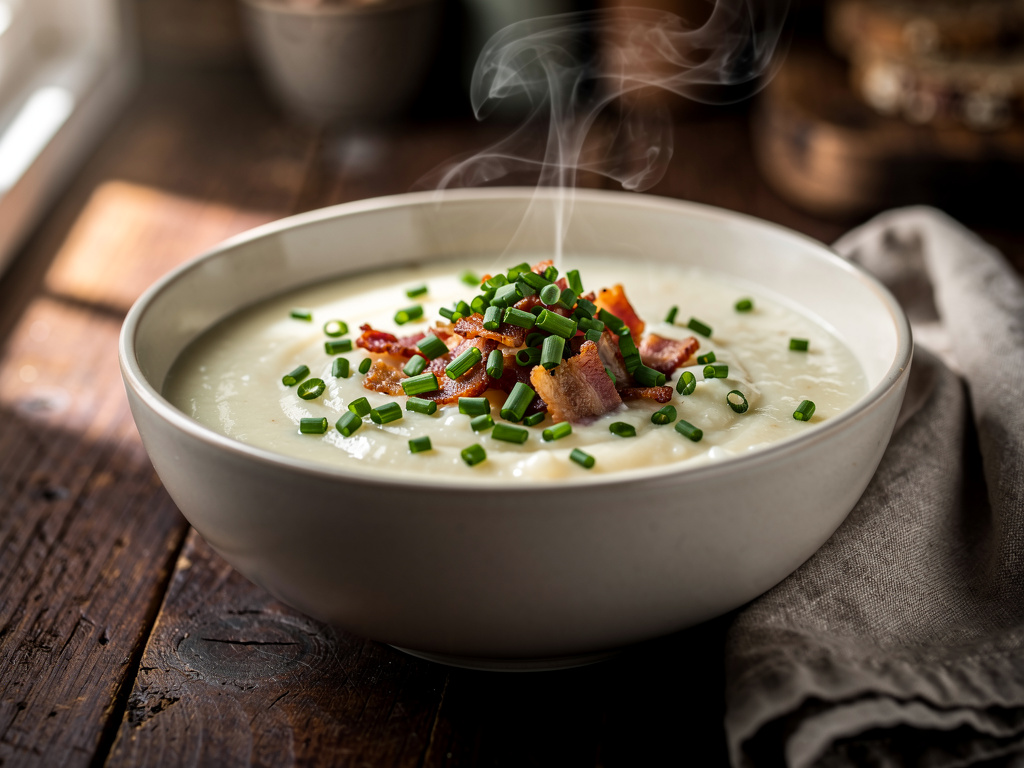
Garnish possibilities are endless: a drizzle of truffle oil, crispy bacon bits, fresh chives, or even roasted garlic cloves saved from your prep work. A dollop of sour cream or crème fraîche adds tangy richness, while toasted pine nuts provide textural contrast.
Storage & Make-Ahead Tips
This soup actually improves with time, making it perfect for meal prep. Store in the refrigerator for up to four days, but note that it will thicken considerably as it cools. Simply thin with additional broth or cream when reheating. The soup freezes beautifully for up to three months—freeze in portion-sized containers for easy weeknight dinners.
When reheating, do so gently over medium-low heat, stirring frequently to prevent scorching. If the soup separates slightly after freezing, a quick whisk or immersion blender pulse will restore its creamy consistency. For make-ahead entertaining, prepare the soup completely but add the cream only when reheating to serve.
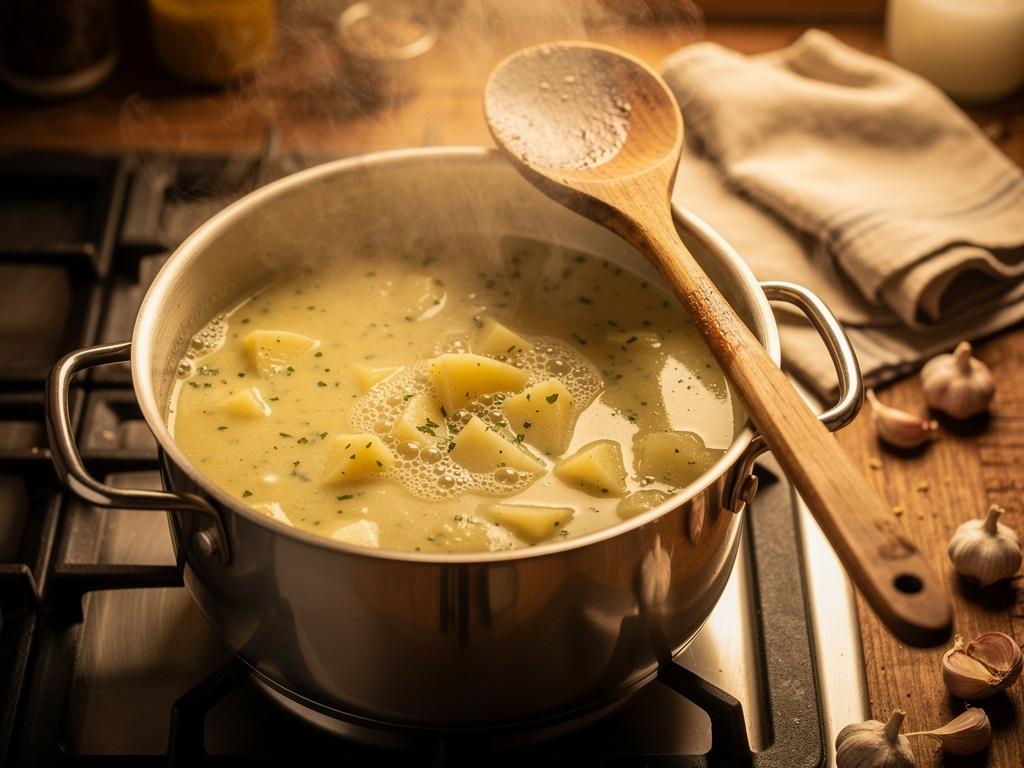
Garlic Potato Soup
Nutrition per serving
Ingredients
Instructions
- .
- .
- .
- .
More Potato Soups Recipes
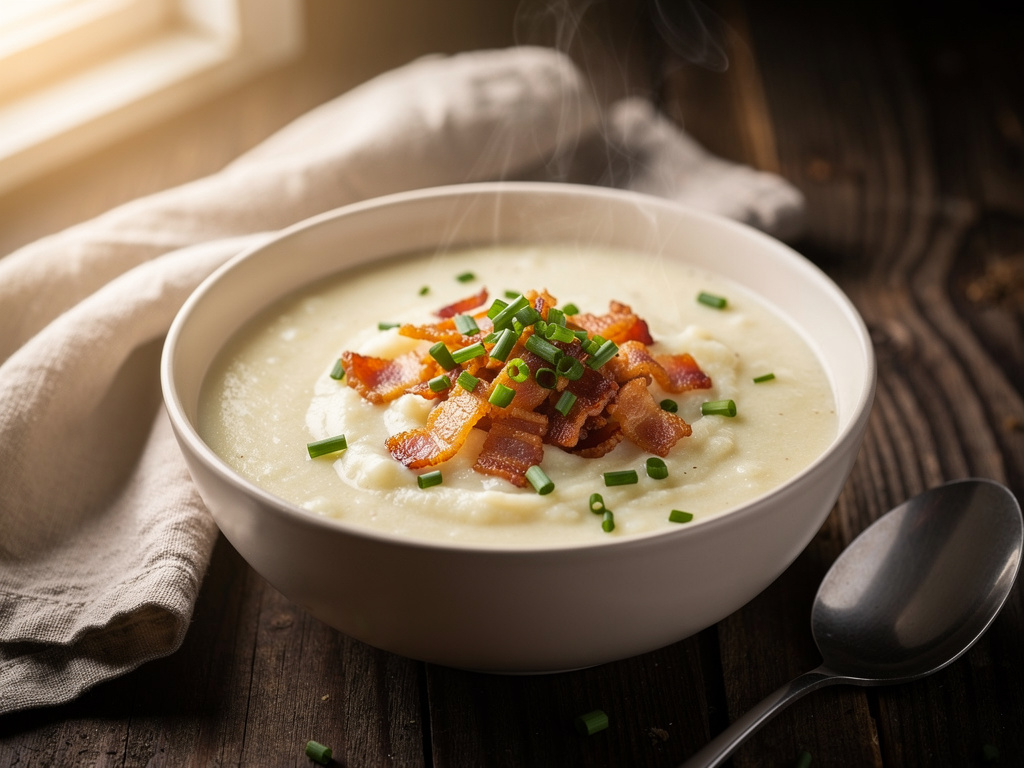
Potato Bacon Soup
Smoky soup with crispy bacon....
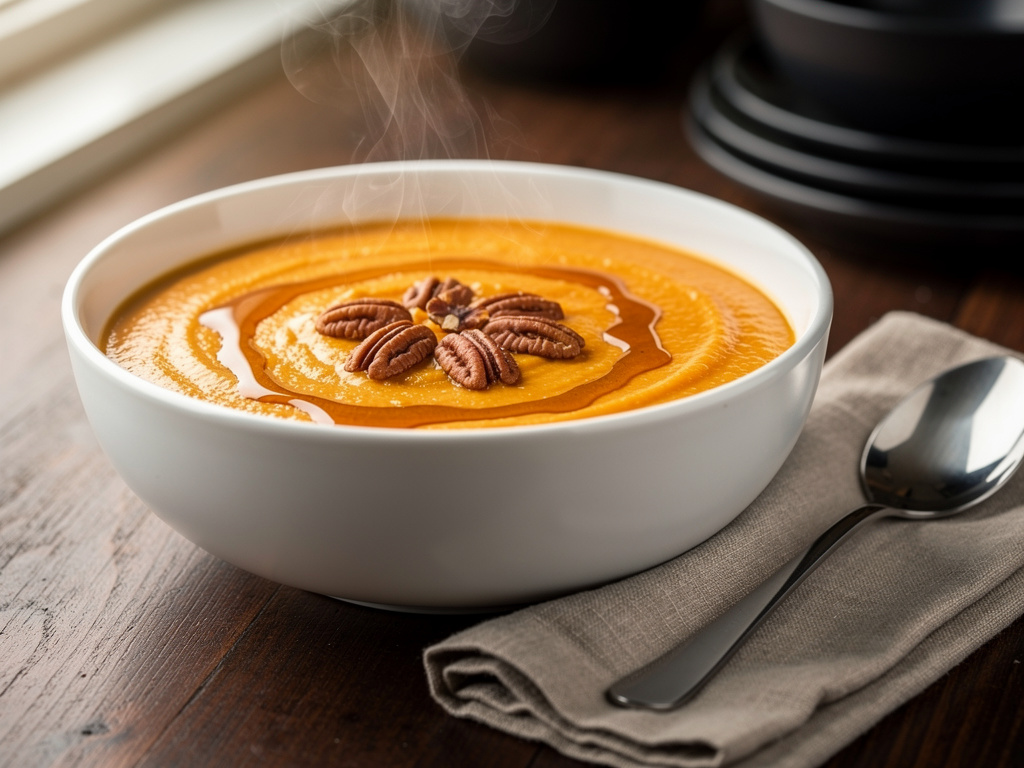
Sweet Potato Soup
Velvety sweet potato soup....
Slow Cooker Potato Soup
Hands-off creamy potato soup....